Washington (2027–28) grade 2 math worksheets
Every Washington 2027–28 grade 2 math standard by its own code, with the printable sheets that practise it: 30 of 30 have sheets. New problems every time, answer keys and a one-page guide for grown-ups. Free, no sign-up.
Data analysis
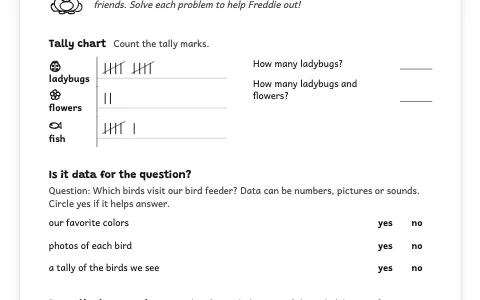
- M.2.DA.DS.1Come up with questions about topics of interest in class, school, or community.Picture and bar graphs
- M.2.DA.DS.2Decide what data answers a question; show it in picture graphs, line plots, or bar graphs.Picture and bar graphs
- M.2.DA.DS.3Compare, find patterns, and predict from data with up to four categories.Picture and bar graphs
- M.2.DA.DS.4With teacher help, state what the data shows to answer the question.Picture and bar graphs
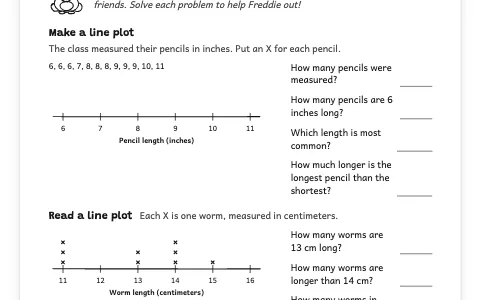
- M.2.DA.MD.9Measure several objects to whole units and show the lengths on a line plot.Line plots
- M.2.DA.MD.10Make picture and bar graphs with up to four categories; solve one-step problems from them.Picture and bar graphs
Relationships
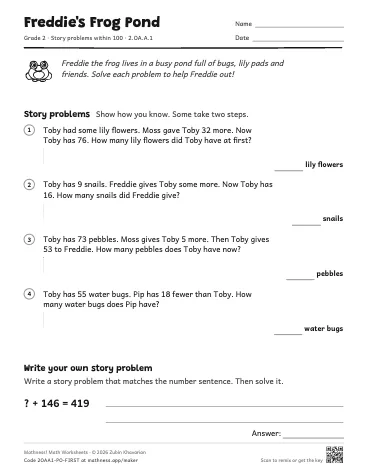
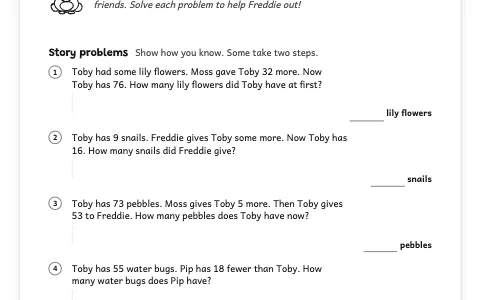
- M.2.R.OA.1Solve one- and two-step add/subtract word problems within 100 with unknowns anywhere.Story problems within 100
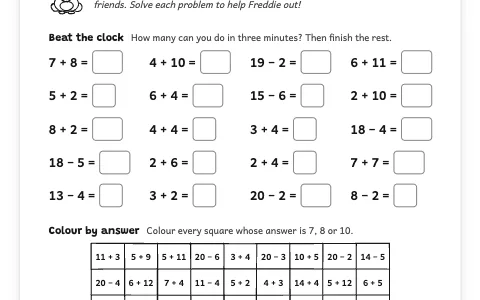
- M.2.R.OA.2Add and subtract within 20 using efficient mental strategies.Facts within 20
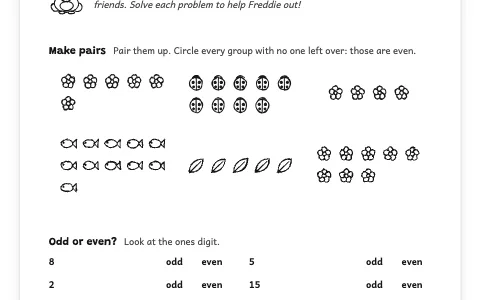
- M.2.R.OA.3Decide if a group up to 20 is odd or even; write even numbers as doubles.Odd and even
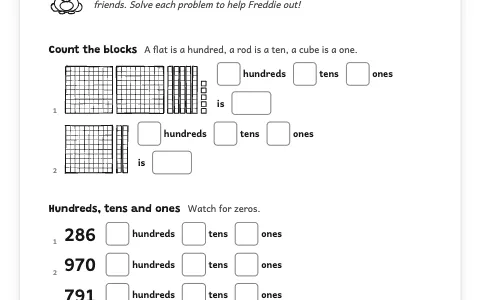
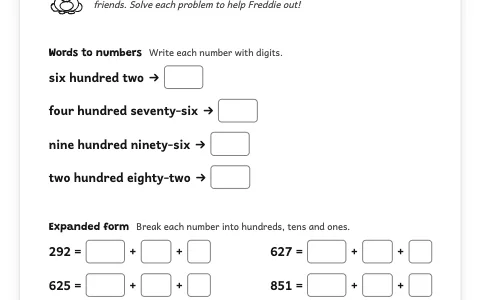
- M.2.R.NBT.1Know the three digits of a three-digit number stand for hundreds, tens, and ones.Hundreds, tens and ones
Spatial reasoning
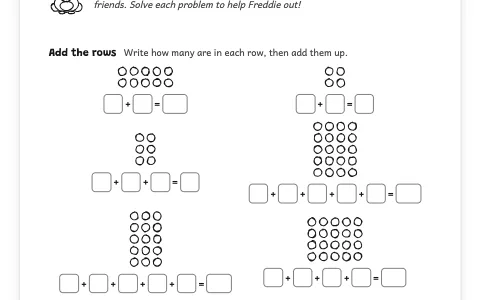
- M.2.SR.OA.4Use addition to find the total in a rectangular array up to 5 by 5.Arrays and repeated addition
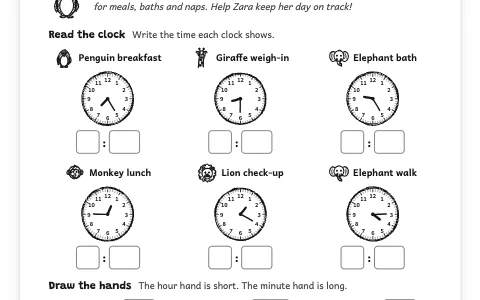
- M.2.SR.MD.7Tell and write time to the nearest five minutes, using a.m. and p.m.Time to 5 minutes
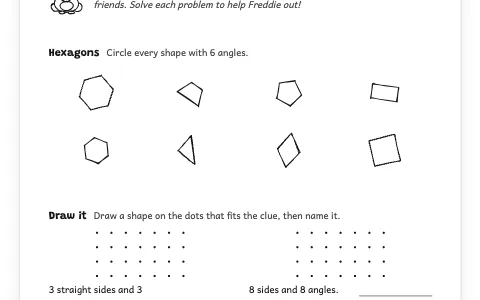
- M.2.SR.G.1Identify and draw shapes with given angles or faces; name triangles through hexagons and cubes.Angles and faces
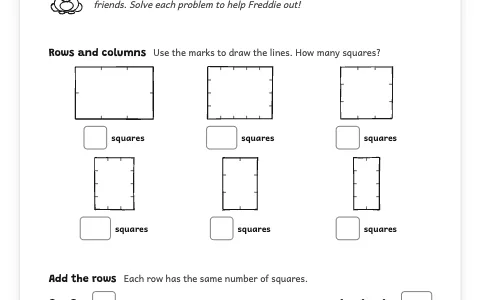
- M.2.SR.G.2Split a rectangle into rows and columns of equal squares and count them.Rows and columns of squares
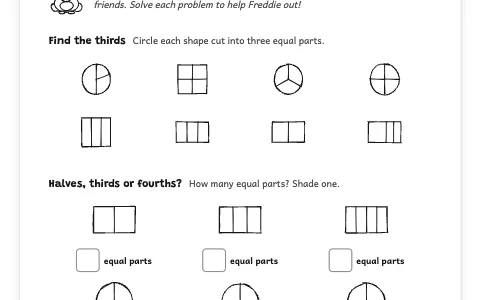
- M.2.SR.G.3Split circles and rectangles into halves, thirds, fourths; equal shares can differ in shape.Halves, thirds and fourths
Quantity
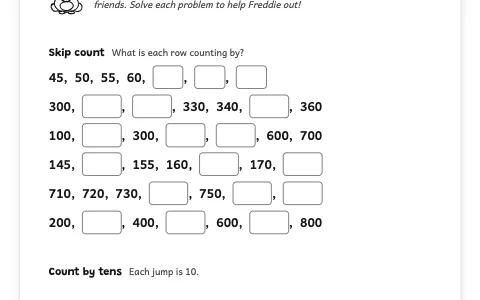
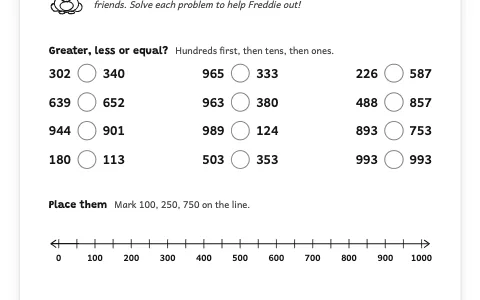
- M.2.Q.NBT.2Count within 1000; skip-count by 5s, 10s, and 100s.Skip counting
- M.2.Q.NBT.3Read and write numbers to 1000 in numerals, words, and expanded form.Reading and writing numbers
- M.2.Q.NBT.4Compare two three-digit numbers using place value and >, =, <.Comparing three-digit numbers
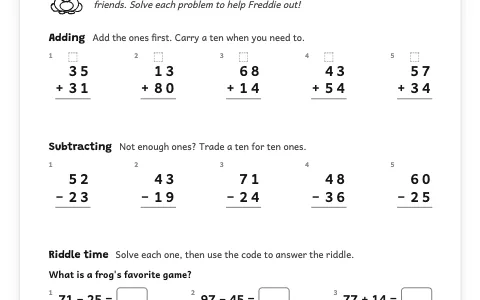
- M.2.Q.NBT.5Add and subtract within 100 using place value strategies.Adding and subtracting within 100
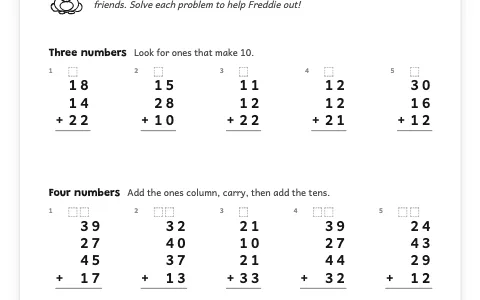
- M.2.Q.NBT.6Add up to four two-digit numbers using place value strategies.Adding up to four numbers
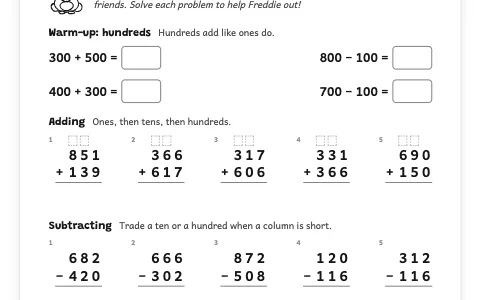
- M.2.Q.NBT.7Add and subtract within 1000 with models and strategies, regrouping when needed.Adding and subtracting within 1000
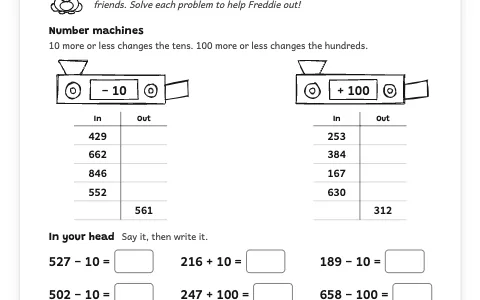
- M.2.Q.NBT.8Mentally add or subtract 10 or 100 from numbers 100 to 900.Adding and subtracting 10 or 100
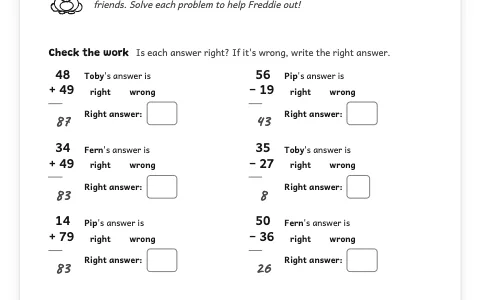
- M.2.Q.NBT.9Explain why addition and subtraction strategies work using place value.Checking strategies
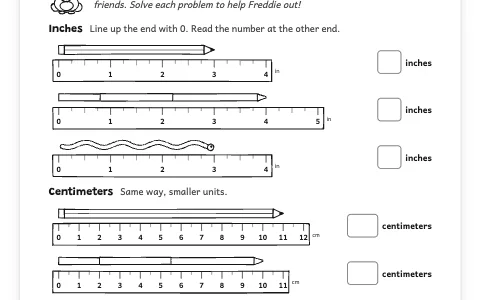
- M.2.Q.MD.1Measure length with rulers, yardsticks, meter sticks, or tape measures.Measuring with a ruler
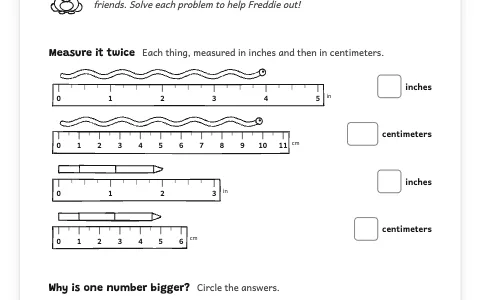
- M.2.Q.MD.2Measure an object with two different units and relate results to unit size.Measuring in two units
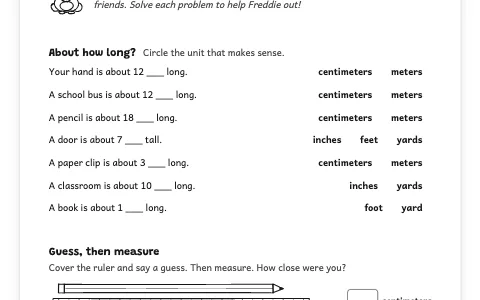
- M.2.Q.MD.3Estimate lengths in inches, feet, centimeters, and meters.Estimating length
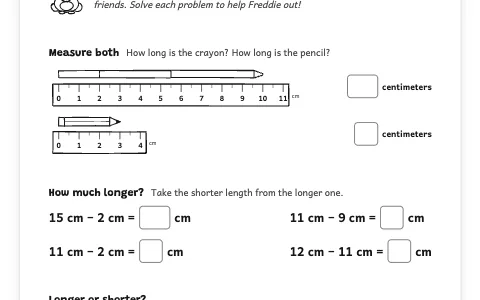
- M.2.Q.MD.4Measure to find how much longer one object is than another.How much longer?
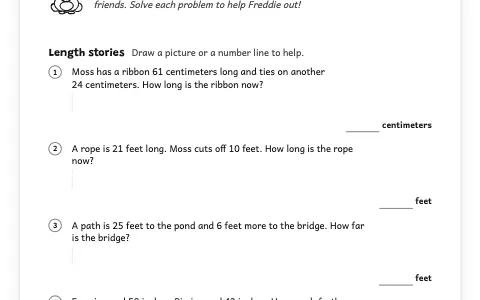
- M.2.Q.MD.5Solve add/subtract word problems within 100 about lengths in the same unit.Length story problems
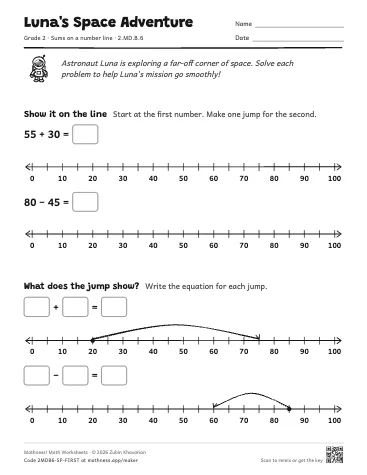
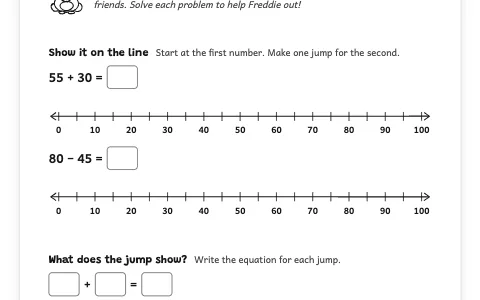
- M.2.Q.MD.6Show whole numbers as lengths on a number line; show sums and differences there.Sums on a number line
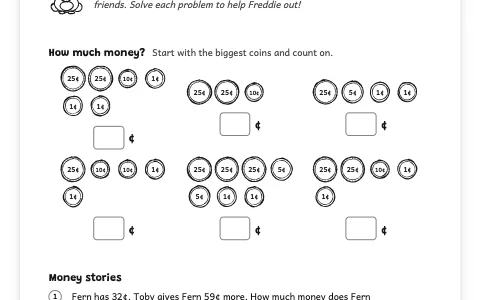
- M.2.Q.MD.8Solve word problems with bills and coins using $ and cent signs.Counting money
Summaries are ours, in plain words. The same sheets by Common Core: Grade 2.