Washington (2027–28) grade 3 math worksheets
Every Washington 2027–28 grade 3 math standard by its own code, with the printable sheets that practise it: 29 of 29 have sheets. New problems every time, answer keys and a one-page guide for grown-ups. Free, no sign-up.
Data analysis
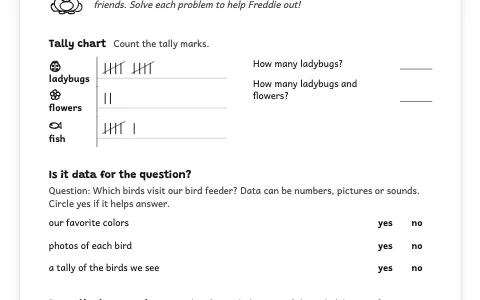
- M.3.DA.DS.1Pose questions of interest that can be answered with different kinds of data.Picture and bar graphs (Grade 2) · Scaled graphs
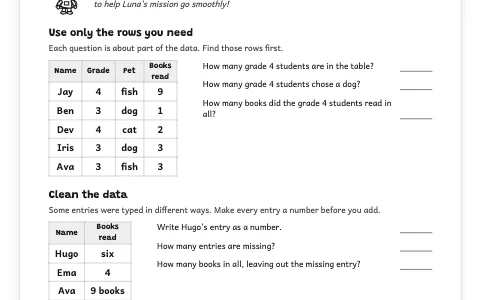
- M.3.DA.DS.2Collect data by surveys, grouping, or measuring, and plan collection to answer the question.Choosing and cleaning data (Grade 4) · Scaled graphs
- M.3.DA.DS.3Show data in several ways, including technology; analyze graphs and judge how data source affects accuracy.Scaled graphs
- M.3.DA.DS.4With teacher help, describe differences between groups and answer the question with data.Scaled graphs
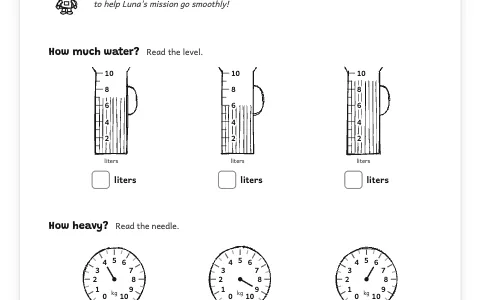
- M.3.DA.MD.2Measure and estimate liquid volume and mass in liters, grams, kilograms; solve one-step problems.Liters and kilograms
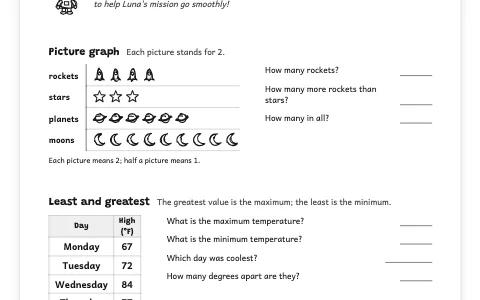
- M.3.DA.MD.3Make scaled picture and bar graphs; solve how-many-more/less problems from them.Scaled graphs
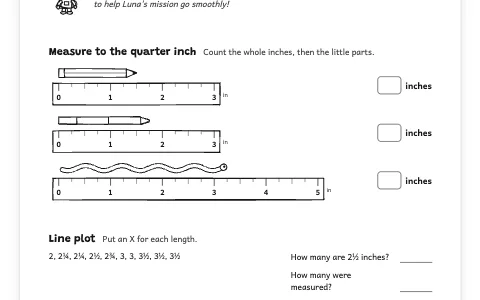
- M.3.DA.MD.4Measure lengths to half and quarter inch and show the data on a line plot.Measuring to ¼ inch
Quantity
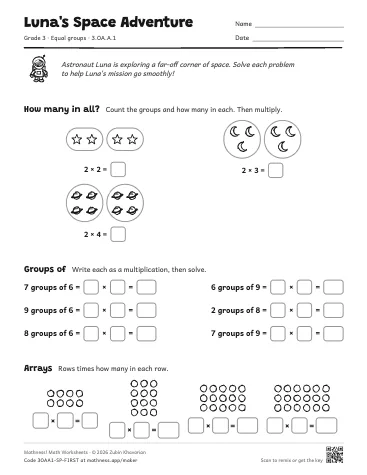
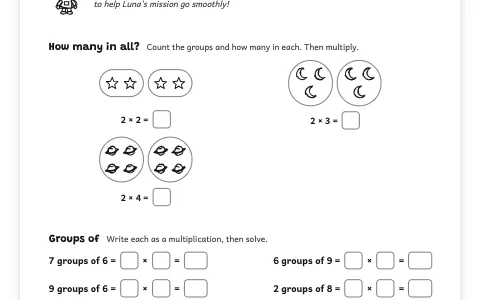
- M.3.Q.OA.1See a product as the total of equal groups, e.g. 5 x 7 as 5 groups of 7.Equal groups
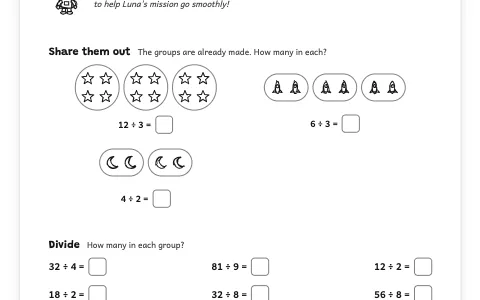
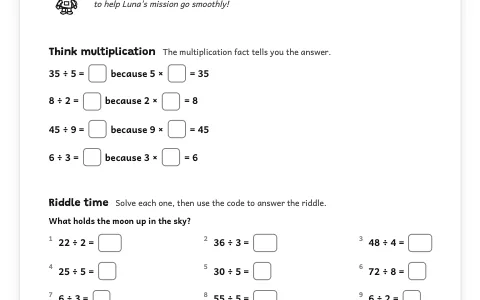
- M.3.Q.OA.2See a quotient as equal sharing or as the number of equal groups.Sharing equally
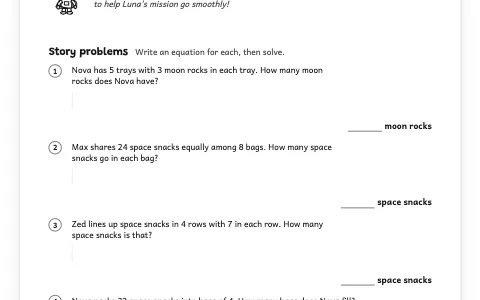
- M.3.Q.OA.3Solve multiply/divide word problems within 100 with equal groups, arrays, or measures.Multiplication and division stories
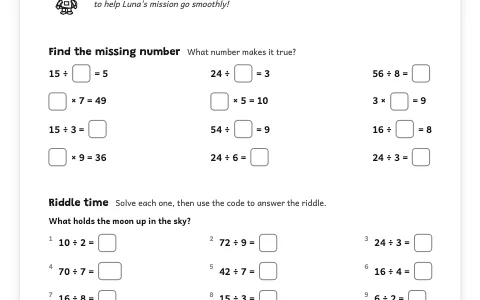
- M.3.Q.OA.4Find the unknown number in a multiplication or division equation.Missing factors
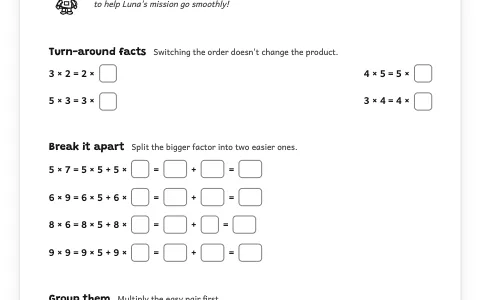
- M.3.Q.OA.5Use properties of operations as strategies to multiply and divide.Multiplying with properties
- M.3.Q.OA.6Treat division as finding a missing factor.Division as a missing factor
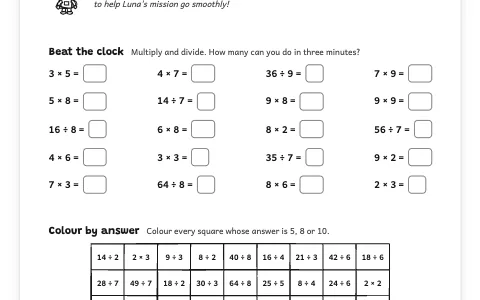
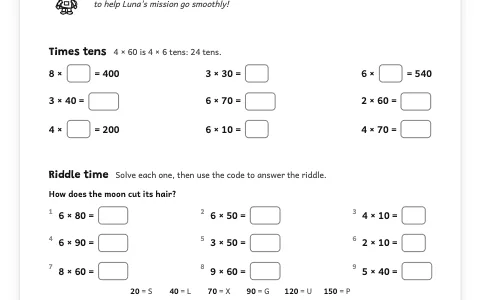
- M.3.Q.OA.7Multiply and divide within 100 using strategies; memorizing all facts no longer stated.Times tables
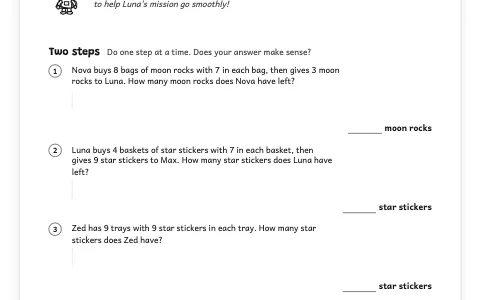
- M.3.Q.OA.8Solve two-step word problems with all four operations; check answers by estimating.Two-step story problems
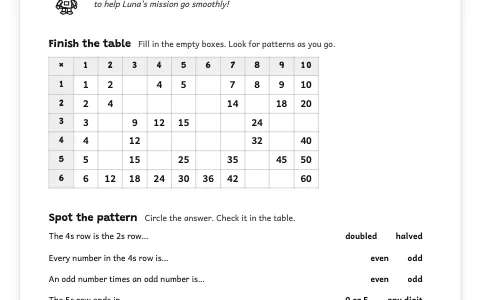
- M.3.Q.OA.9Find and explain patterns in addition and multiplication tables.Patterns in tables
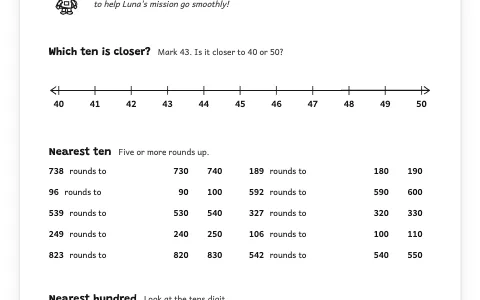
- M.3.Q.NBT.1Round whole numbers to the nearest 10 or 100.Rounding to 10 and 100
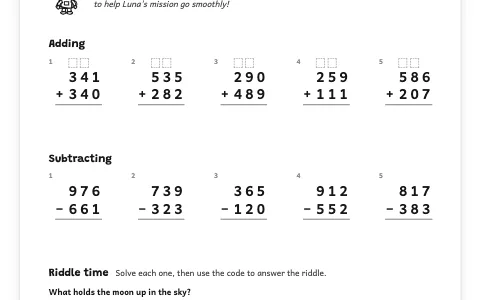
- M.3.Q.NBT.2Add and subtract within 1000 using place value strategies (algorithms not named).Adding and subtracting within 1000
- M.3.Q.NBT.3Multiply one-digit numbers by multiples of 10 such as 9 x 80.Multiplying by tens
Relationships
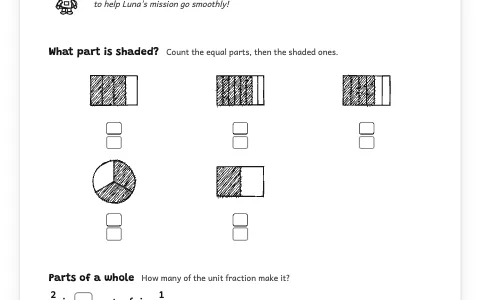
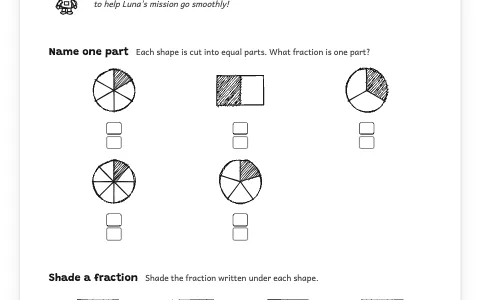
- M.3.R.NF.1Understand a unit fraction as one equal part of a whole; fractions are built from unit fractions.Fractions of a whole
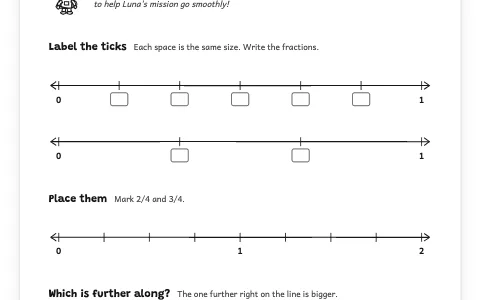
- M.3.R.NF.2Treat fractions as numbers and place them on a number line.Fractions on a number line
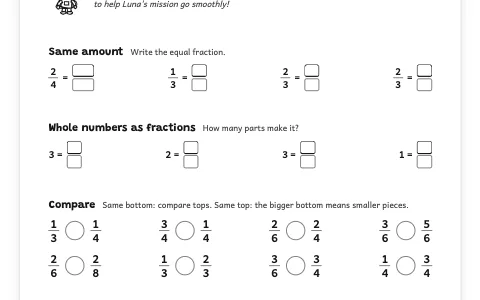
- M.3.R.NF.3Explain equivalent fractions and compare fractions with like numerators or denominators.Equivalent and comparing fractions
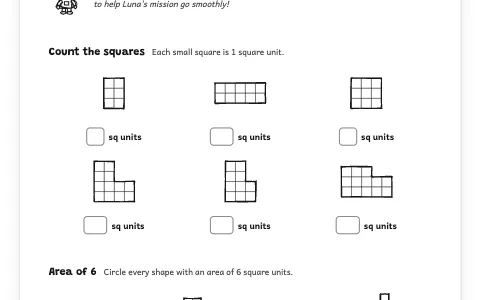
- M.3.R.MD.5Understand area as covering a flat figure with unit squares.What is area?
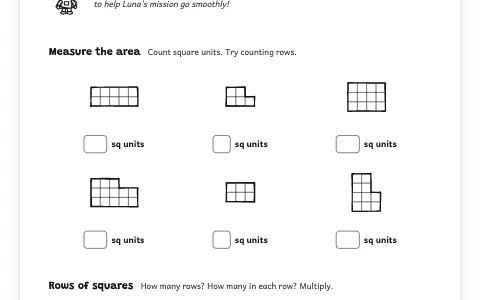
- M.3.R.MD.6Measure area by counting unit squares in different units.Measuring area
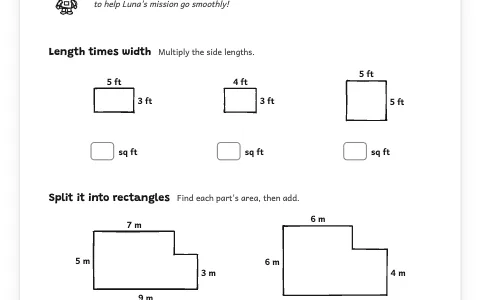
- M.3.R.MD.7Connect area to multiplication and addition, including the distributive property and rectilinear figures.Area by multiplying
Spatial reasoning
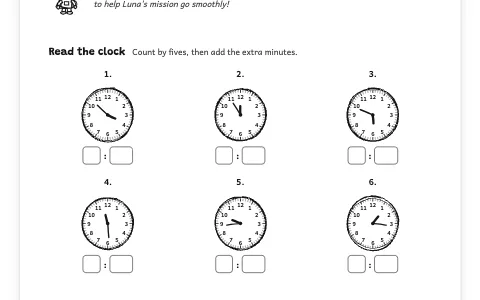
- M.3.SR.MD.1Tell time to the minute and solve word problems about elapsed minutes.Time to the minute
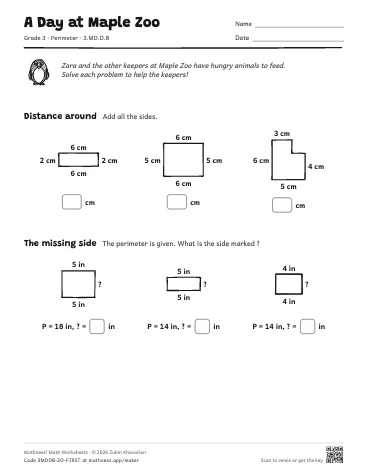
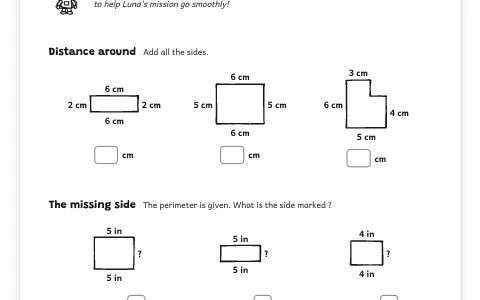
- M.3.SR.MD.8Solve perimeter problems, including unknown sides and same perimeter with different area.Perimeter
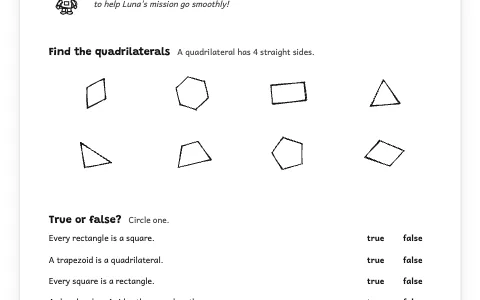
- M.3.SR.G.1Know shape categories share features; recognize quadrilaterals like rhombuses, rectangles, squares.Quadrilaterals
- M.3.SR.G.2Split shapes into equal-area parts and name each part as a unit fraction.Equal parts as fractions
Summaries are ours, in plain words. The same sheets by Common Core: Grade 3.