Indiana grade 3 math worksheets
Every Indiana grade 3 math standard by its own code, with the printable sheets that practise it: 24 of 24 have sheets. New problems every time, answer keys and a one-page guide for grown-ups. Free, no sign-up.
Number sense
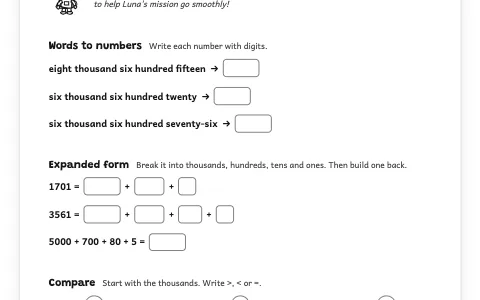
- 3.NS.1Read and write whole numbers to 10,000 in words, models, standard form and expanded form.Numbers to 10,000
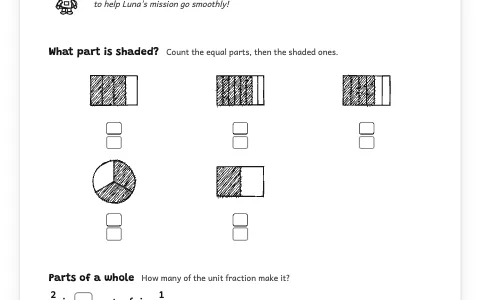
- 3.NS.2Model a unit fraction as one equal part of a whole, and other fractions as several unit parts.Fractions of a whole
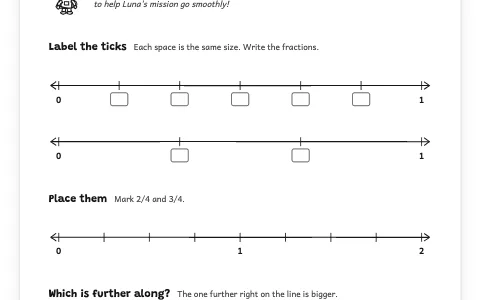
- 3.NS.3Place a fraction on a number line by marking off equal unit-fraction lengths from zero.Fractions on a number line
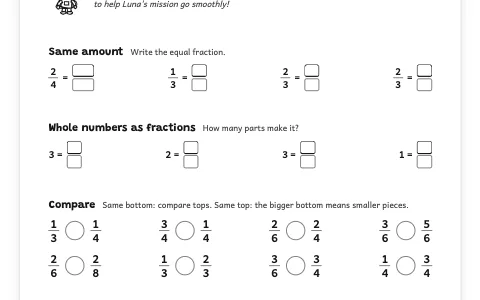
- 3.NS.4Use fraction models to show and make simple equivalent fractions like 1/2 = 2/4.Equivalent and comparing fractions
- 3.NS.5Compare two fractions with the same top or bottom number and record with >, = or <.Equivalent and comparing fractions
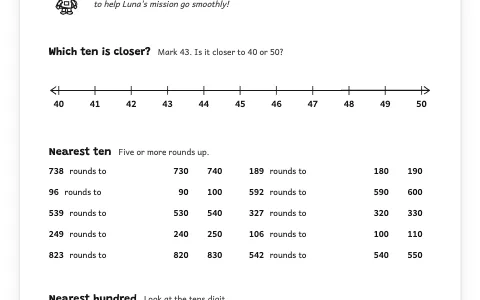
- 3.NS.6Use place value to round 2- and 3-digit numbers to the closest ten or hundred.Rounding to 10 and 100
Computation & algebraic thinking
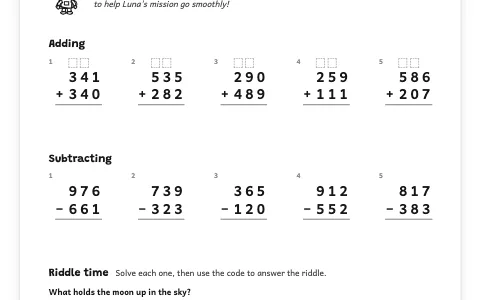
- 3.CA.1Add and subtract multi-digit whole numbers fluently with place-value strategies and algorithms.Adding and subtracting within 1000 · Adding and subtracting big numbers (Grade 4)
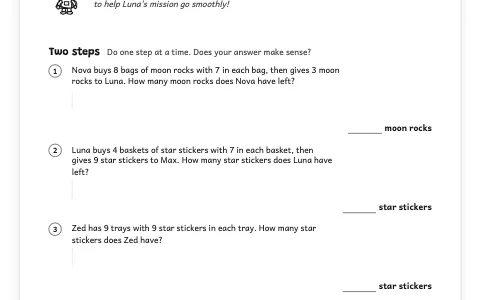
- 3.CA.2Solve real-world problems that add and subtract multi-digit whole numbers, using equations with an unknown.Two-step story problems
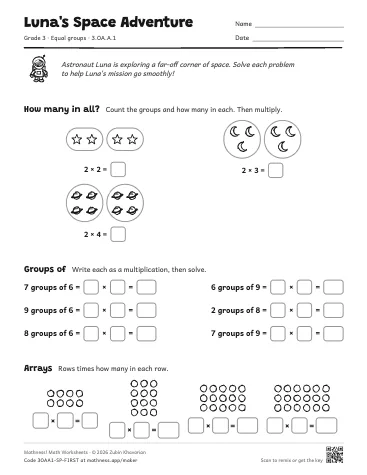
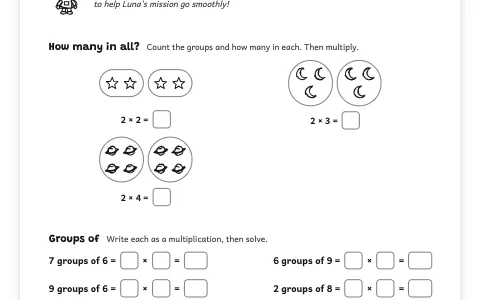
- 3.CA.3Model multiplication as equal groups, arrays, areas and number-line jumps; show what multiplying by 0 and 1 does.Equal groups
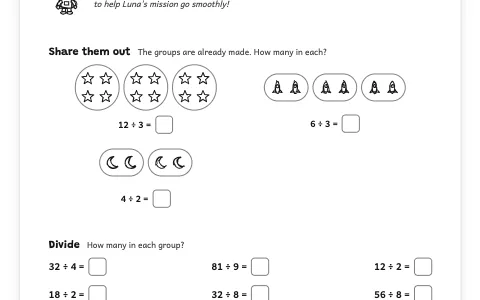
- 3.CA.4Model division as sharing, partitioning and the inverse of multiplication; show dividing with 0 and 1.Sharing equally · Division as a missing factor
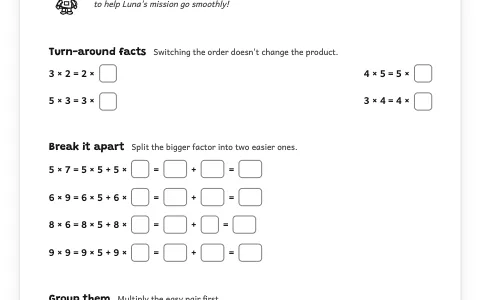
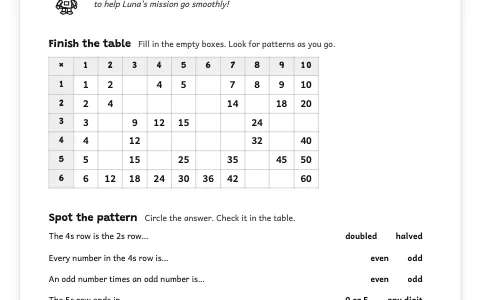
- 3.CA.5Multiply and divide within 100 using fact families and properties of operations.Multiplying with properties · Times tables
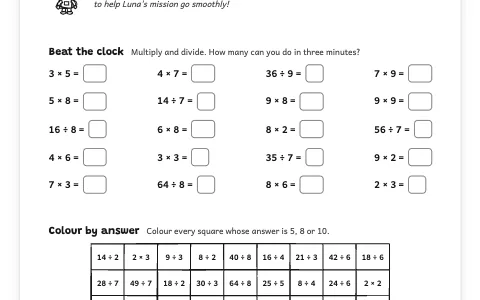
- 3.CA.6Know all multiplication facts and related division facts for 0 through 10 fluently.Times tables
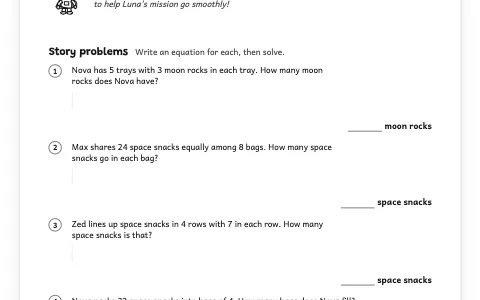
- 3.CA.7Solve multiplication and division word problems within 100 about equal groups, arrays and measures.Multiplication and division stories
- 3.CA.8Make, extend and state the rule for number patterns within 100, including in addition and times tables.Patterns in tables
Geometry
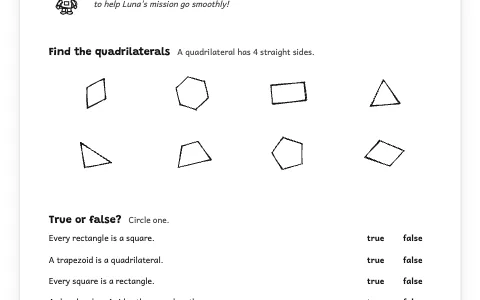
- 3.G.1Recognize rhombuses, rectangles and squares as quadrilaterals; draw examples and non-examples.Quadrilaterals
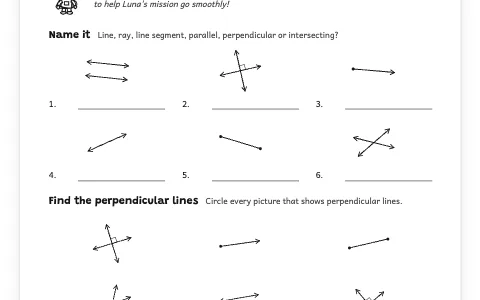
- 3.G.2Identify and draw points, lines and line segments with tools, and use them to describe shapes.Lines, rays and segments (Grade 4)
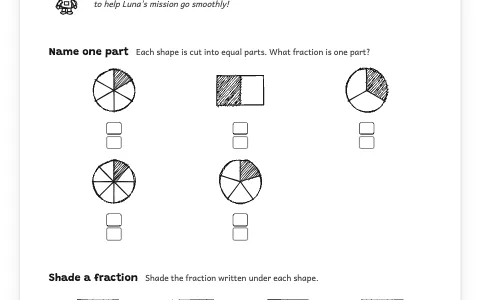
- 3.G.3Split shapes into parts of equal area and name each part as a unit fraction.Equal parts as fractions
Measurement
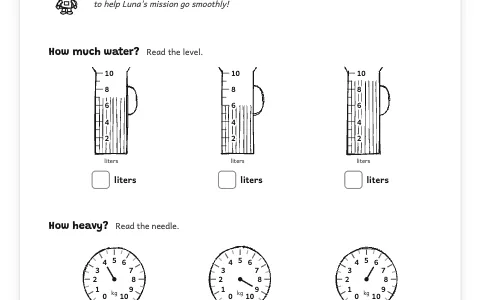
- 3.M.1Estimate and measure mass in grams and kilograms and volume in quarts, gallons and liters; solve problems.Liters and kilograms
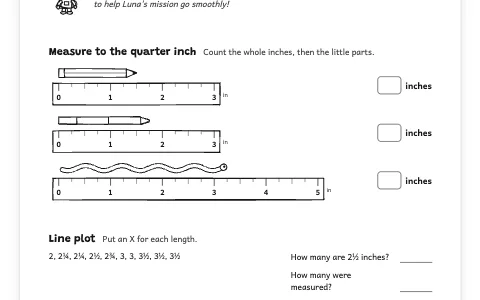
- 3.M.2Measure length to the quarter inch, weight in pounds, and temperature in Celsius and Fahrenheit.Measuring to ¼ inch
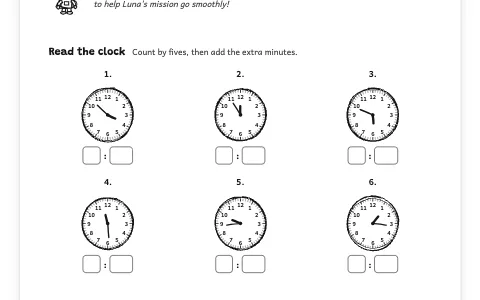
- 3.M.3Tell time to the minute and solve elapsed-time problems in minutes, e.g. on a number line.Time to the minute
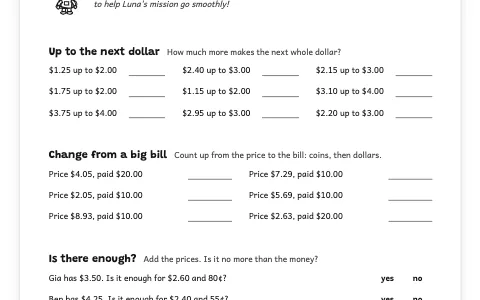
- 3.M.4Count any mix of coins and bills, write amounts with cents or dollar signs, and check affordability.Making change to $5 · Counting money (Grade 2)
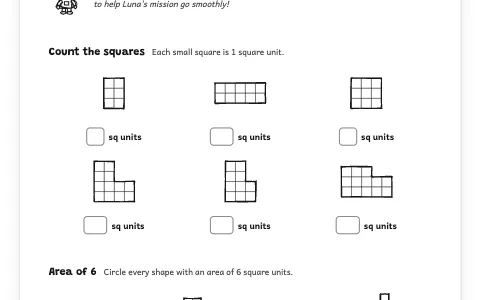
- 3.M.5Find rectangle area by tiling and by multiplying sides; draw rectangles sharing area or perimeter.What is area? · Measuring area · Area by multiplying · Perimeter
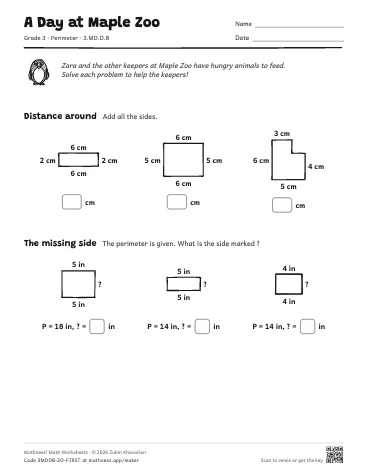
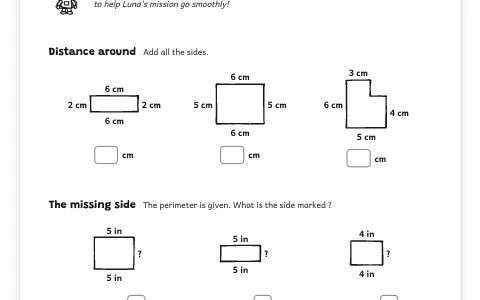
- 3.M.6Find the perimeter of polygons, including when one side length is unknown.Perimeter
Data analysis
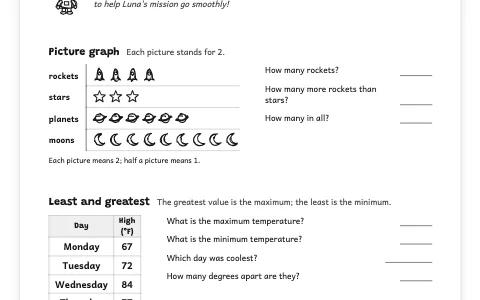
- 3.DA.1Collect data, show it in scaled bar and picture graphs, and solve problems using the graphs.Scaled graphs
Summaries are ours, in plain words. The same sheets by Common Core: Grade 3.