
North Carolina (2028–29) grade 5 math worksheets
Every North Carolina 2028–29 grade 5 math standard by its own code, with the printable sheets that practise it: 52 of 52 have sheets. New problems every time, answer keys and a one-page guide for grown-ups. Free, no sign-up.
Algebraic & numerical reasoning
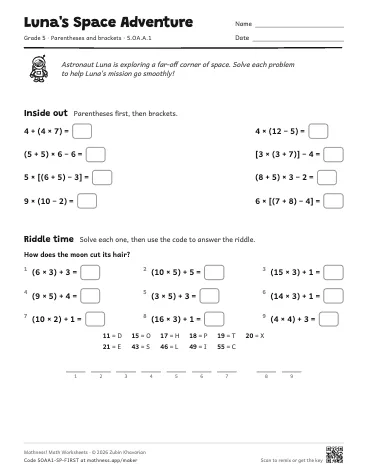
- 5.ANR.1.1
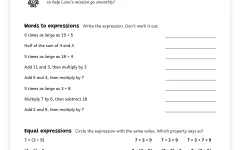
Work out two-step expressions in the right order.
- 5.ANR.1.2
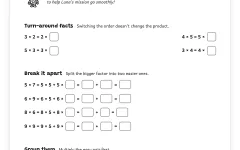
Explain expressions using the turn-around, grouping and distributive properties.
- 5.ANR.1.3
Match expressions to pictures, words and models.
- 5.ANR.2.1
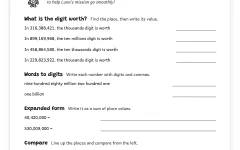
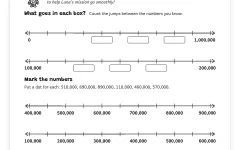
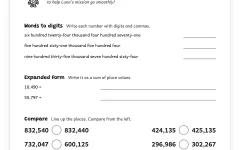
Read and write numbers to one million and know each digit's value.
- 5.ANR.2.2
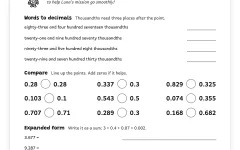
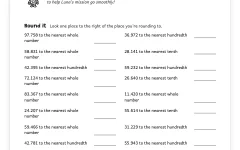
Read and write decimals to thousandths and know each digit's value.
- 5.ANR.2.3
Write decimals to thousandths in standard, expanded and word form.
- 5.ANR.2.4
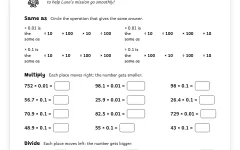
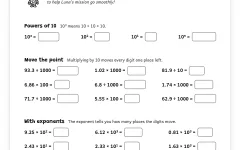
Explain patterns when multiplying by 1,000, 100, 10, 0.1 and 0.01 and dividing by 10 and 100.
- 5.ANR.2.5
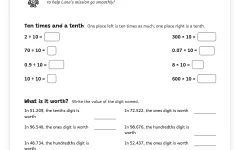
Know a digit is worth 10 times as much as in the place to its right, and 1/10 as much as in the place to its left, thousandths to millions.
- 5.ANR.2.6
Compare and order decimals to thousandths with >, <, = and ≠.
- 5.ANR.3.1
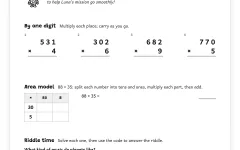
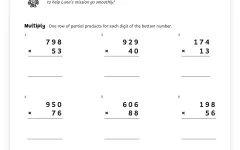
Multiply up to three digits by two digits, with area models and the standard method.
- 5.ANR.3.2
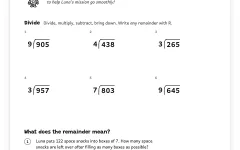
Divide up to four digits by one digit, with remainders.
- 5.ANR.3.3
Build to long division of up to four digits by one digit.
- 5.ANR.3.4
Decide what a remainder means in a division story problem.
- 5.ANR.3.5
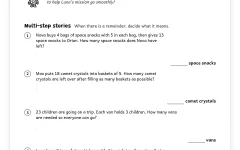
Solve multi-step story problems with whole numbers and all four operations.
- 5.ANR.3.6
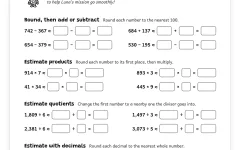
Check that an answer makes sense by estimating.
- 5.ANR.4.1
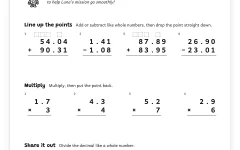
Add and subtract decimals to thousandths, with up to six digits in all.
- 5.ANR.4.2
Multiply a decimal to hundredths by a whole number up to 4.
- 5.ANR.4.3
Divide with a whole number up to 4 and a decimal to hundredths.
- 5.ANR.4.4
Solve two-step story problems with decimals.
- 5.ANR.4.5
Check decimal answers by estimating.
- 5.ANR.5.1
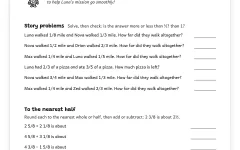
Add and subtract fractions and mixed numbers with related unlike denominators: halves, fourths, eighths; thirds, sixths, twelfths; fifths, tenths, hundredths.
- 5.ANR.5.2
Solve one- and two-step story problems adding and subtracting fractions and mixed numbers with related unlike denominators.
- 5.ANR.5.3
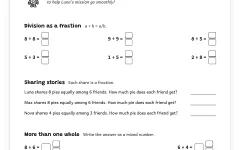
Understand a fraction as the top number divided by the bottom, with sharing stories and models; denominators 2, 3, 4, 5, 6, 8, 10 and 12.
- 5.ANR.5.4
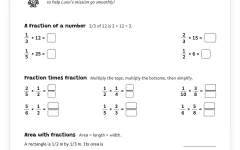
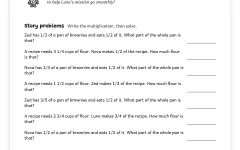
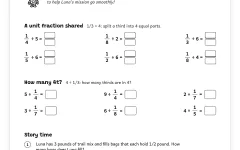
Multiply a whole number up to 12 by a fraction or mixed number with denominators 2, 3, 4, 5, 6, 8, 10 or 12.
- 5.ANR.5.5
Multiply two fractions or mixed numbers up to 12 with halves, thirds and fourths.
- 5.ANR.5.6
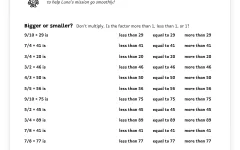
Explain why multiplying by more than 1 makes a number bigger, and by less than 1 smaller.
- 5.ANR.5.7
Divide unit fractions by whole numbers, and whole numbers up to 10 by unit fractions.
- 5.ANR.6.1
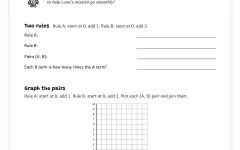
Make two number patterns from two rules.
- 5.ANR.6.2
Describe how matching terms in two patterns are related.
- 5.ANR.6.3
Use pattern relationships to solve story problems.

Spatial, geometric & measurement reasoning
- 5.SGMR.1.1
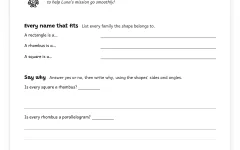
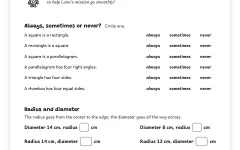
Sort quadrilaterals into a family tree by their properties.
- 5.SGMR.1.2
Know every property of a quadrilateral family belongs to its smaller families too.
- 5.SGMR.2.1
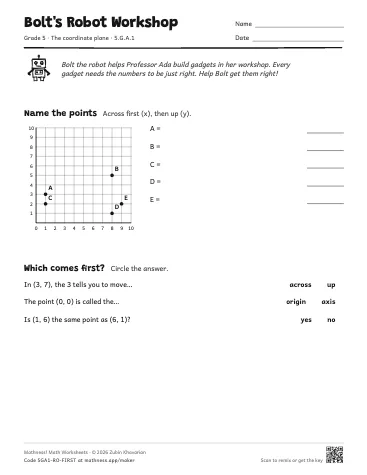
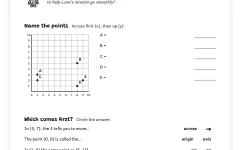
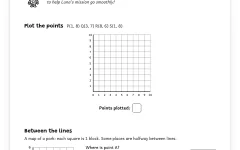
Plot points on a coordinate grid.
- 5.SGMR.2.2
Solve coordinate grid problems, like moving between points or finding a missing corner.
- 5.SGMR.2.3
Make ordered pairs from two pattern rules and plot them.
- 5.SGMR.2.4
Solve story problems using patterns plotted on a grid.
- 5.SGMR.3.1
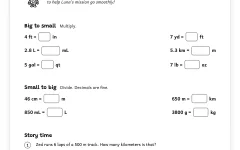
Check that a metric or customary unit conversion in a story makes sense.
- 5.SGMR.3.2
Solve one- and two-step story problems converting customary units, given the conversion.
- 5.SGMR.3.3
Solve one- and two-step story problems converting metric units, given the conversion.
- 5.SGMR.4.1
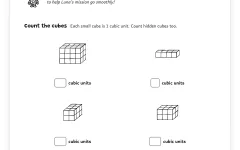
Understand volume by filling prisms with unit cubes.
- 5.SGMR.4.2
Find the volume of a box by packing it with unit cubes.
- 5.SGMR.4.3
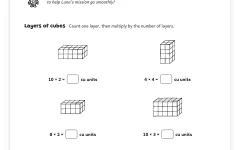
Link volume to length × width × height and to base area × height.
- 5.SGMR.4.4
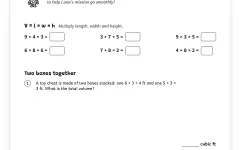
Use the volume formula for rectangular prisms, including story problems.
- 5.SGMR.4.5
Find a missing edge length from a prism's volume.
- 5.SGMR.4.6
Find the volume of solids made of two rectangular prisms with one-digit sides, in story problems.
Reasoning with data
- 5.RD.1.1
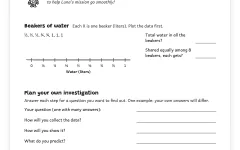
Ask questions that need data in groups, numbers or changes over time to answer.
- 5.RD.1.2
Tell whether a question will give data in groups, numbers or changes over time.
- 5.RD.1.3
Plan how to collect data to answer a question.
- 5.RD.1.4
Collect data to answer a question, including data that changes over time.
- 5.RD.1.5
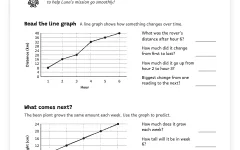
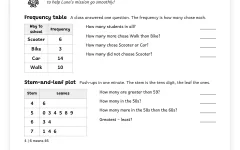
Show data on a line graph, line plot or bar graph.
- 5.RD.1.6
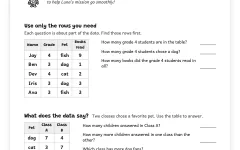
Describe and compare data, draw conclusions and back them up with the data.
- 5.RD.1.7
Spot patterns and trends in data and use them to make predictions.
Summaries are ours, in plain words. The same sheets by Common Core: Grade 5. North Carolina's standards are published by the North Carolina Department of Public Instruction; Mathness! isn't affiliated with or endorsed by it.