Washington (2027–28) grade 4 math worksheets
Every Washington 2027–28 grade 4 math standard by its own code, with the printable sheets that practise it: 32 of 32 have sheets. New problems every time, answer keys and a one-page guide for grown-ups. Free, no sign-up.
Data analysis
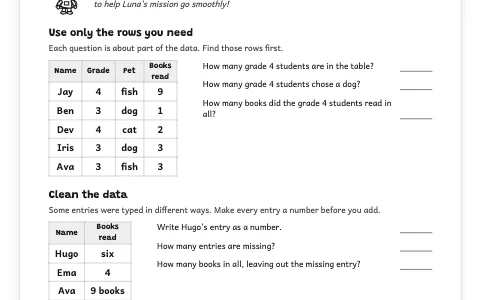
- M.4.DA.DS.1Pose questions of interest that call for data, then refine them.Choosing and cleaning data · Line plots with fractions
- M.4.DA.DS.2Plan how to collect data, including with technology, and judge if more data is needed.Choosing and cleaning data · Line plots with fractions
- M.4.DA.DS.3Analyze tables, graphs, line plots, or spreadsheets to back a claim; judge if data is enough.Choosing and cleaning data · Line plots with fractions
- M.4.DA.DS.4With teacher help, describe differences between groups and answer the question with data.Choosing and cleaning data · Line plots with fractions
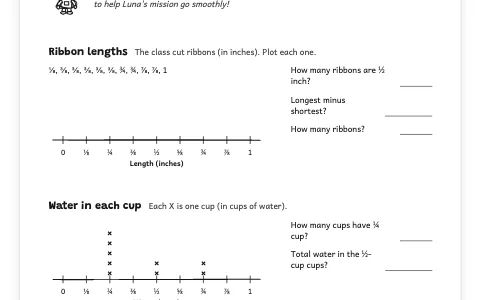
- M.4.DA.MD.4Make line plots of fractional measurements and solve add/subtract problems from them.Line plots with fractions
Relationships
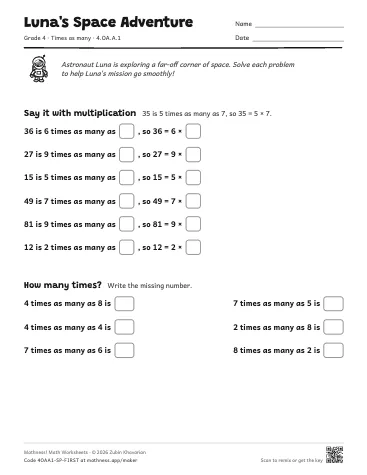
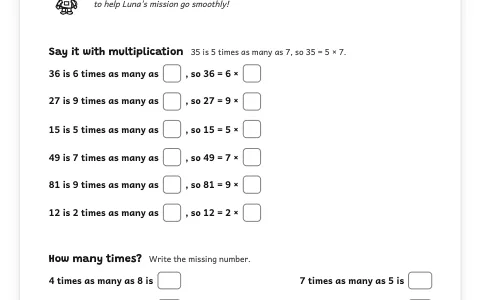
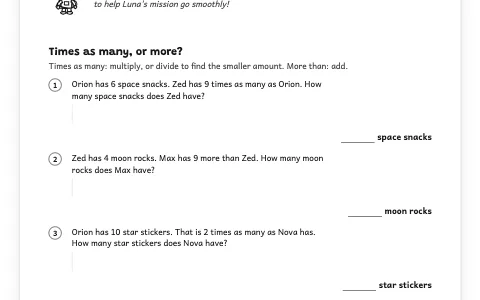
- M.4.R.OA.1Read a multiplication equation as a comparison, e.g. 35 is 5 times as many as 7.Times as many
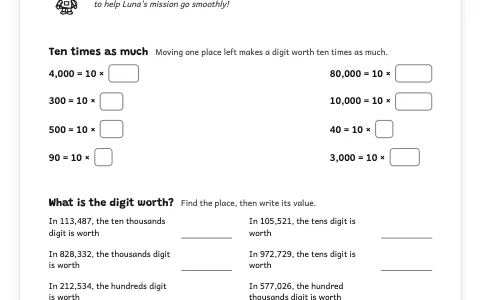
- M.4.R.NBT.1A digit is worth ten times as much as the same digit one place to its right.Ten times the place
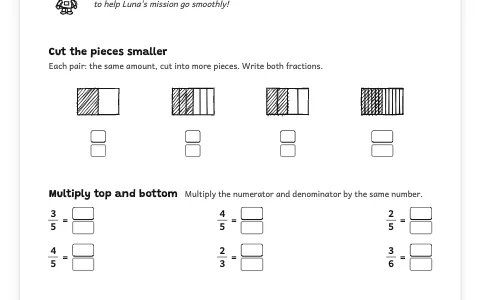
- M.4.R.NF.1Explain fraction equivalence with visual models and generate equivalent fractions.Equivalent fractions
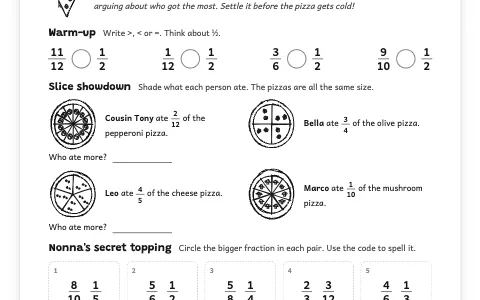
- M.4.R.NF.2Compare fractions with unlike numerators and denominators using common denominators or benchmarks.Comparing fractions
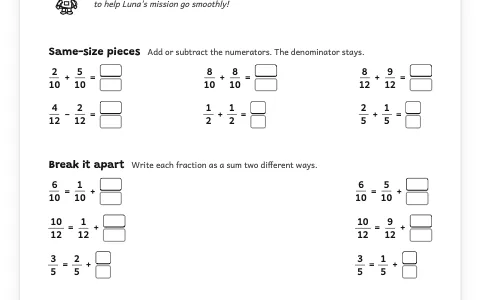
- M.4.R.NF.3Build and break apart fractions and mixed numbers into unit fractions; add/subtract like denominators.Adding fractions
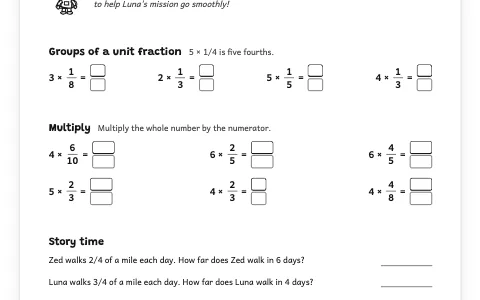
- M.4.R.NF.4Multiply a fraction by a whole number using visual models and word problems.Fraction times a whole number
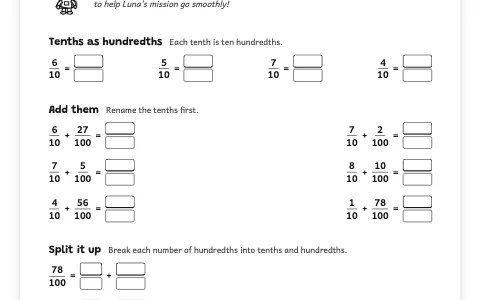
- M.4.R.NF.5Rewrite tenths as hundredths and add fractions with denominators 10 and 100.Tenths and hundredths
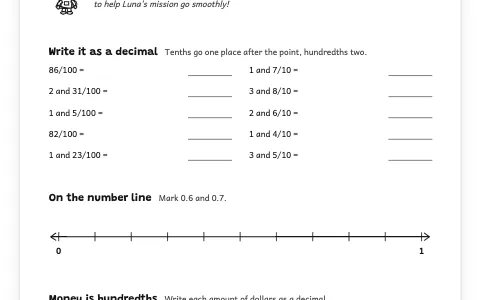
- M.4.R.NF.6Write tenths and hundredths as decimals and connect them to fractions.Decimals to hundredths
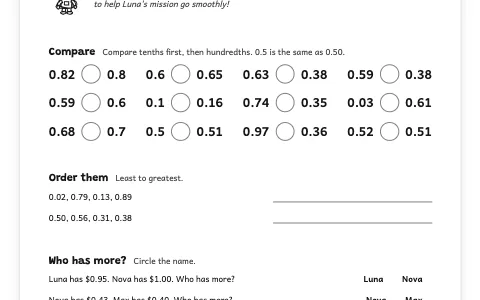
- M.4.R.NF.7Compare decimals to hundredths by reasoning about size, using >, =, <.Comparing decimals
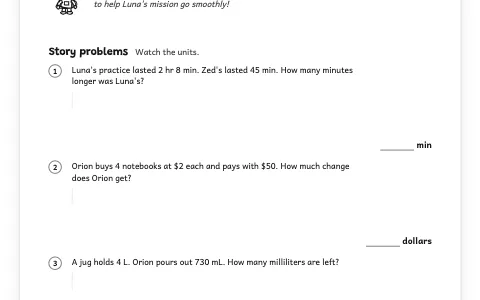
- M.4.R.MD.2Solve word problems on distance, time, volume, mass, and money with all four operations.Measurement story problems
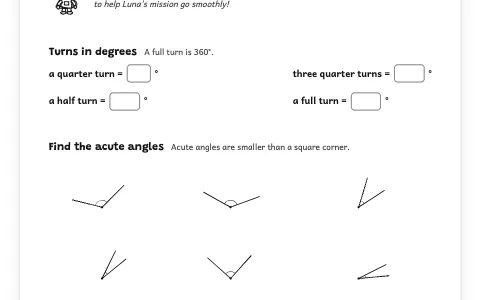
- M.4.R.MD.5Understand angles as two rays from a point, measured in degrees.Angles and degrees
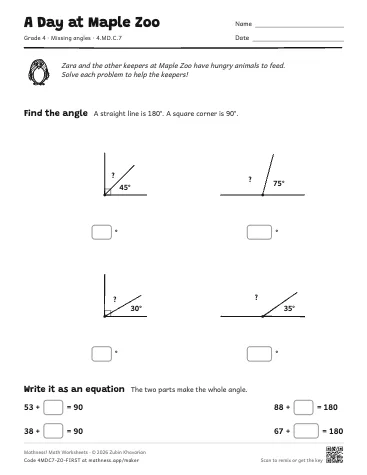
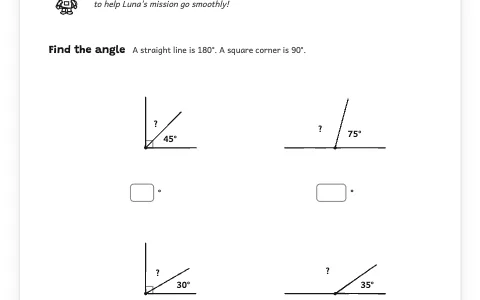
- M.4.R.MD.7Angle measures add; find unknown angles in diagrams using equations.Missing angles
Quantity
- M.4.Q.OA.2Solve multiplicative comparison word problems, telling them apart from additive ones.Comparing with times
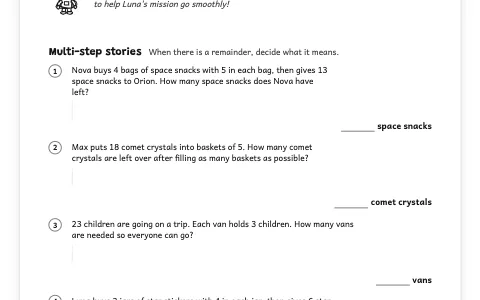
- M.4.Q.OA.3Solve multistep whole-number word problems, interpreting remainders; check by estimating.Multi-step problems
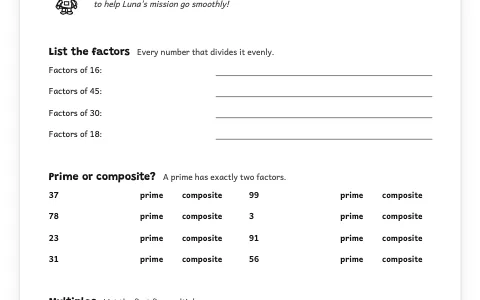
- M.4.Q.OA.4Find factor pairs for 1 to 100, identify multiples, and tell prime from composite.Factors and primes
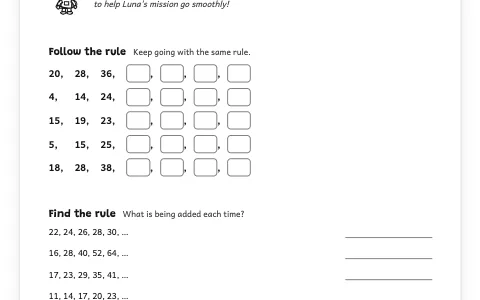
- M.4.Q.OA.5Make a number or shape pattern from a rule and explain features of the pattern.Number patterns
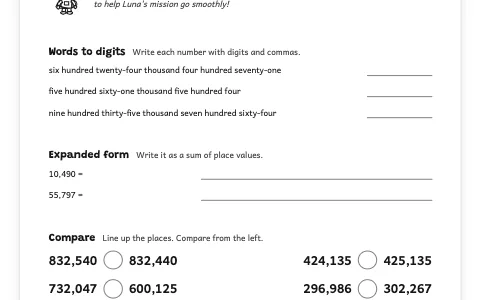
- M.4.Q.NBT.2Read, write, and compare multi-digit whole numbers in numerals, words, and expanded form.Reading big numbers
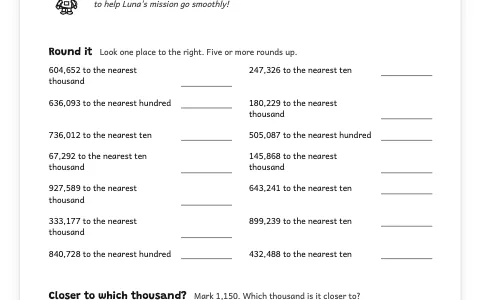
- M.4.Q.NBT.3Estimate multi-digit whole numbers to any place up to one million with various strategies.Rounding big numbers
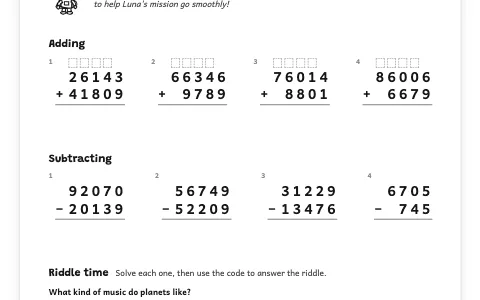
- M.4.Q.NBT.4Add and subtract multi-digit whole numbers with strategies or algorithms (standard algorithm not required).Adding and subtracting big numbers
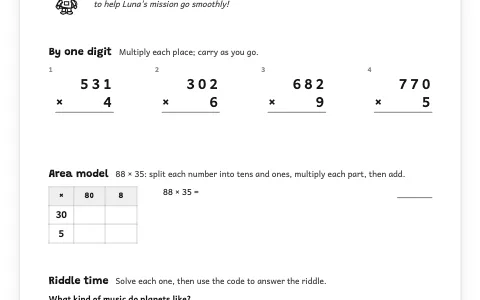
- M.4.Q.NBT.5Multiply up to four digits by one digit, and two-digit by two-digit, with place value strategies.Multiplying bigger numbers
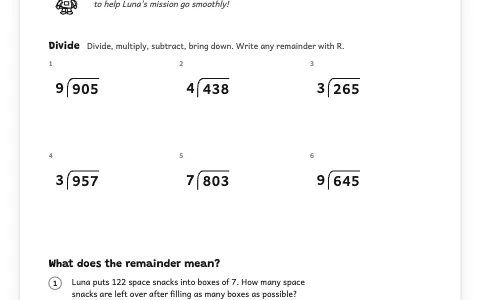
- M.4.Q.NBT.6Divide up to four-digit numbers by one-digit numbers, with remainders, using strategies.Long division
Spatial reasoning
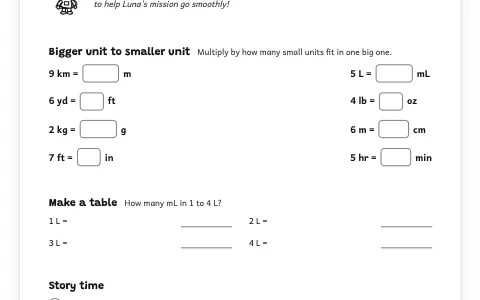
- M.4.SR.MD.1Know relative sizes of units in one system and convert larger units to smaller.Converting units
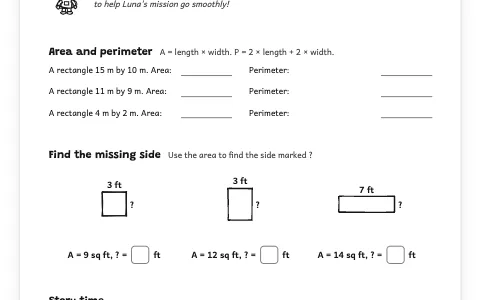
- M.4.SR.MD.3Use area and perimeter formulas for rectangles in real problems.Area and perimeter formulas
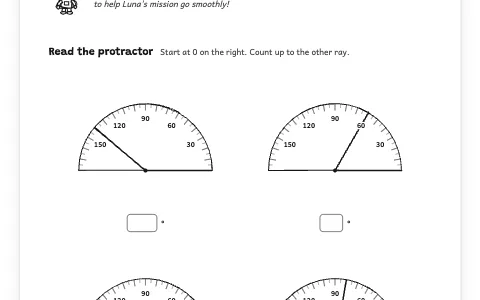
- M.4.SR.MD.6Measure angles with a protractor and draw angles of a given size.Measuring angles
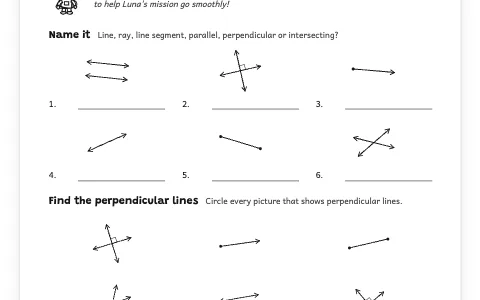
- M.4.SR.G.1Draw and identify points, lines, segments, rays, angle types, perpendicular and parallel lines.Lines, rays and segments
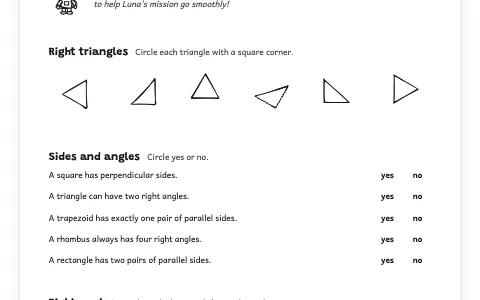
- M.4.SR.G.2Classify 2-D figures by parallel or perpendicular sides and angle types, including right triangles.Classifying shapes
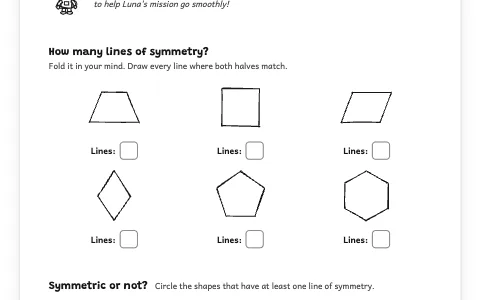
- M.4.SR.G.3Find lines of symmetry and identify figures with line symmetry.Lines of symmetry
Summaries are ours, in plain words. The same sheets by Common Core: Grade 4.