Minnesota (2027–28) grade 2 math worksheets
Every Minnesota 2027–28 grade 2 math standard by its own code, with the printable sheets that practise it: 31 of 31 have sheets. New problems every time, answer keys and a one-page guide for grown-ups. Free, no sign-up.
Data & probability
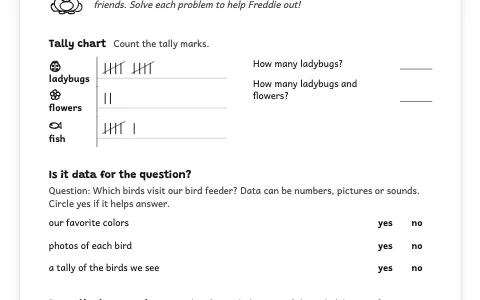
- 2.1.1.1Notice data patterns and write statistical questions.Picture and bar graphs
- 2.1.1.2Decide what counts as data for a question and see that data can vary.Picture and bar graphs
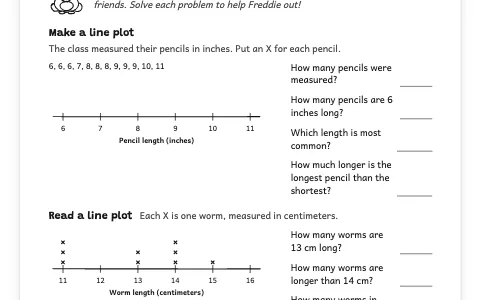
- 2.1.1.3Collect data and show it with drawings, picture graphs, dot plots or technology.Line plots · Picture and bar graphs
- 2.1.1.4Make predictions from patterns in data displays.Picture and bar graphs
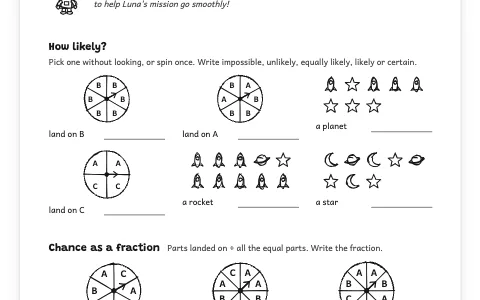
- 2.1.2.1Tell the difference between possible and likely.Chance and probability (Grade 4)
Spatial reasoning
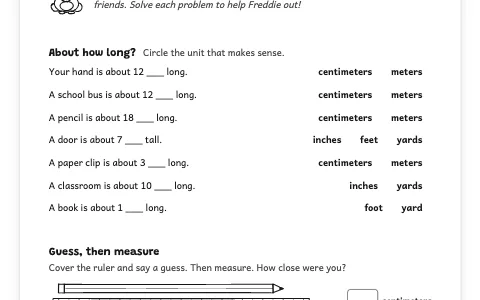
- 2.2.3.1Estimate lengths in inches, feet, centimeters and meters.Estimating length
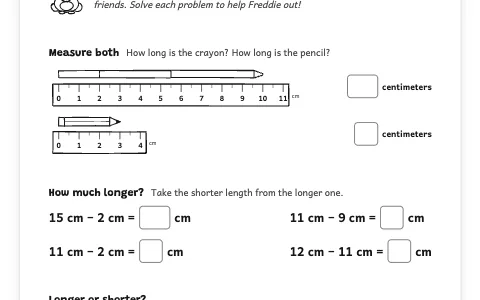
- 2.2.3.2Measure how much longer one object is than another in standard units.How much longer?
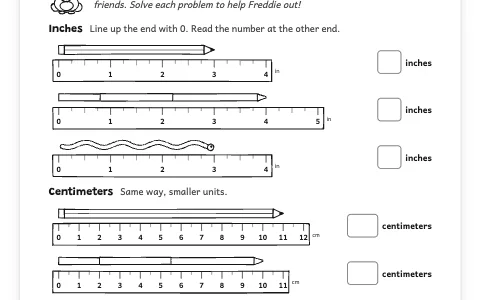
- 2.2.3.3Pick and use tools like rulers, yardsticks and tapes to measure length.Measuring with a ruler
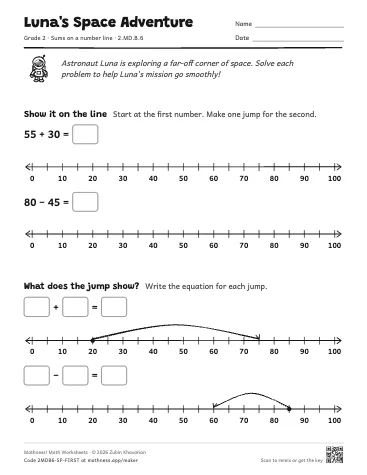
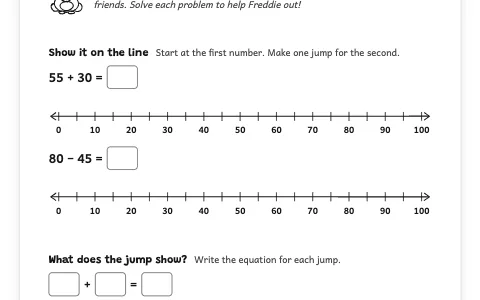
- 2.2.3.4Show whole numbers, sums and differences within 100 on a number line.Sums on a number line
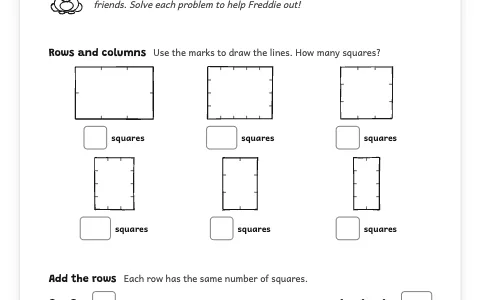
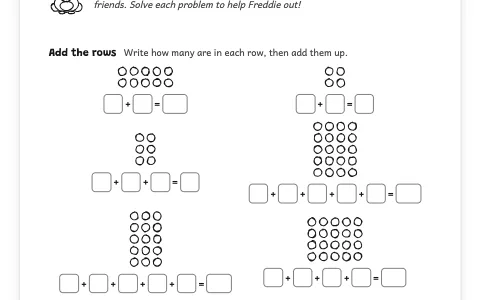
- 2.2.3.5Split a rectangle into rows and columns of equal squares and count them.Rows and columns of squares
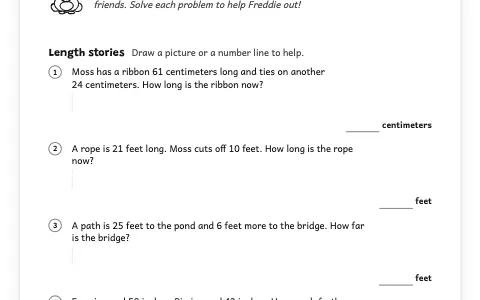
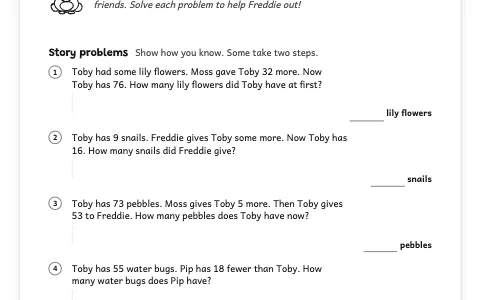
- 2.2.3.6Add and subtract within 100 to solve length problems using drawings and equations.Length story problems
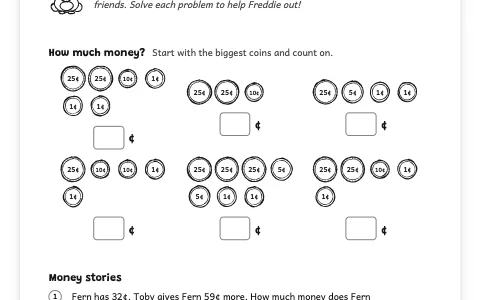
- 2.2.3.7Name coins including quarters, total their value and write amounts with $ and ¢.Counting money
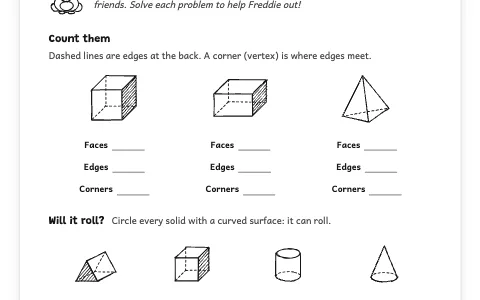
- 2.2.4.1Classify flat and solid shapes by counting faces, sides, edges and vertices.Faces, edges and corners · Angles and faces
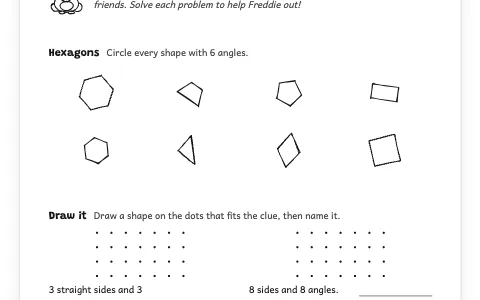
- 2.2.4.2Draw or build basic flat shapes such as triangles, trapezoids and hexagons.Angles and faces
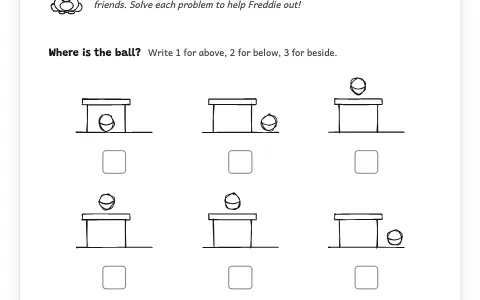
- 2.2.4.3Describe where one object is in relation to another.Above, below, beside (Kindergarten)
Patterns & relationships
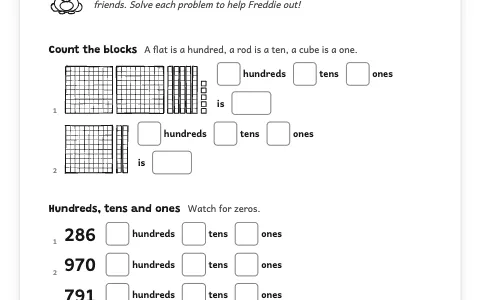
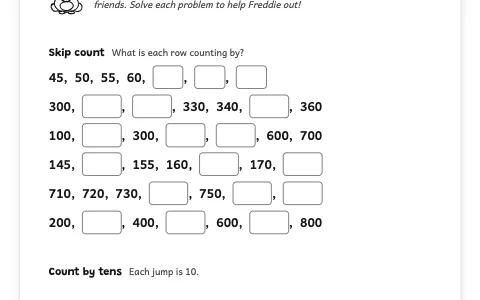
- 2.3.5.1Count collections up to 1000 by grouping tens and hundreds and record the count.Hundreds, tens and ones · Skip counting
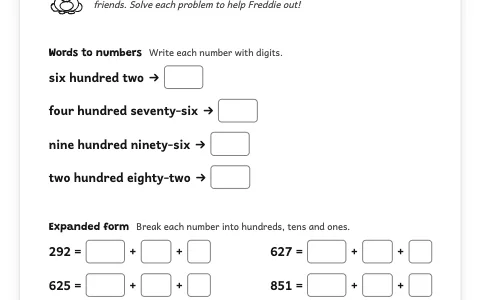
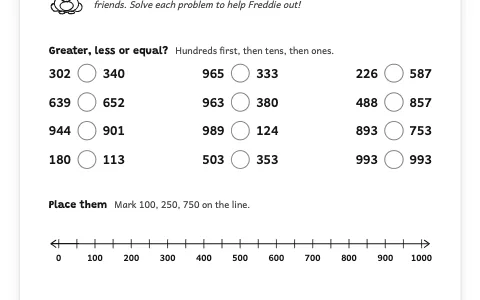
- 2.3.5.2Read, write, compare, order and represent whole numbers up to 1000.Reading and writing numbers · Comparing three-digit numbers
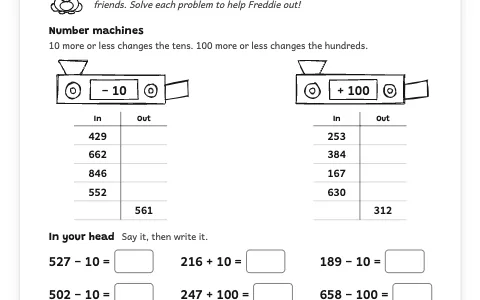
- 2.3.5.3Mentally find 10 or 100 more or less than a three-digit number and explain.Adding and subtracting 10 or 100
- 2.3.5.4Describe numbers up to 1000 as hundreds, tens and ones; 100 is ten tens.Hundreds, tens and ones
- 2.3.5.5Estimate sums and differences of two-digit numbers.Estimating sums and differences (Grade 3) · Two-step story problems (Grade 3)
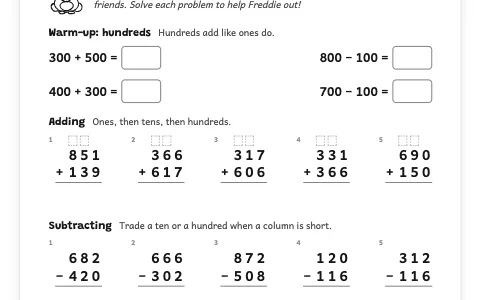
- 2.3.5.6Add and subtract within 1000 with models and place value, linking to written methods.Adding and subtracting within 1000
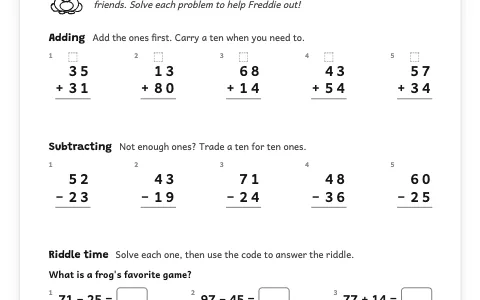
- 2.3.5.7Add and subtract two-digit numbers flexibly with place-value strategies and explain why they work.Adding and subtracting within 100 · Checking strategies
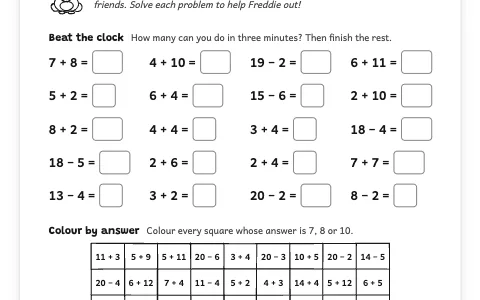
- 2.3.5.8Add and subtract within 20 fluently using mental strategies.Facts within 20
- 2.3.5.9Use landmark tens to add up to 100 and subtract from 100 fluently.Adding and subtracting within 100
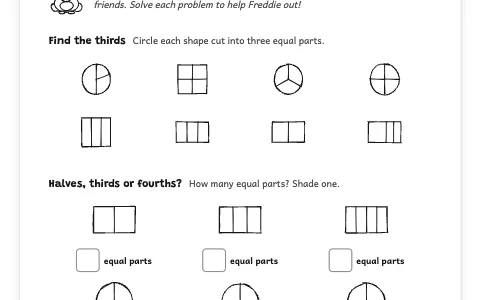
- 2.3.5.10Share items equally among 2 or 4 groups and name halves and fourths.Halves, thirds and fourths
- 2.3.6.1Compare two- and three-digit numbers using hundreds, tens and ones.Comparing three-digit numbers
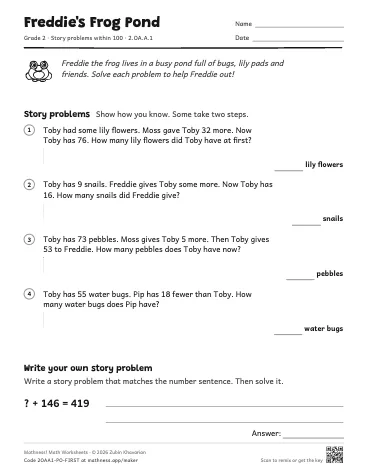
- 2.3.6.2Write number sentences with unknowns for situations and solve them using addition-subtraction links.Story problems within 100
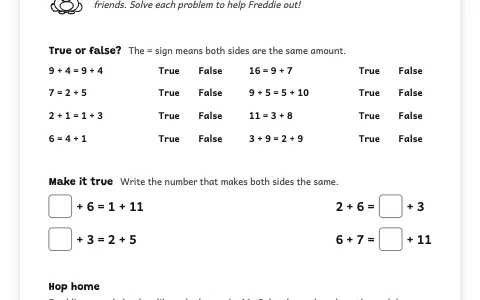
- 2.3.6.3Make and justify claims about addition and subtraction using true/false and open equations.True or false equations (Grade 1) · Missing numbers (Grade 1)
- 2.3.7.1Find and describe number patterns from repeated adding, skip counting and arrays.Arrays and repeated addition · Skip counting
- 2.3.7.2Skip count by 2s and 5s from any number up to 120.Skip counting
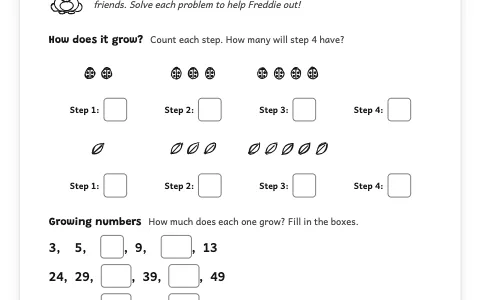
- 2.3.7.3Write number expressions that describe a growing picture pattern.Growing patterns (Grade 1)

Summaries are ours, in plain words. The same sheets by Common Core: Grade 2.