Minnesota (2027–28) grade 1 math worksheets
Every Minnesota 2027–28 grade 1 math standard by its own code, with the printable sheets that practise it: 28 of 28 have sheets. New problems every time, answer keys and a one-page guide for grown-ups. Free, no sign-up.
Data & probability
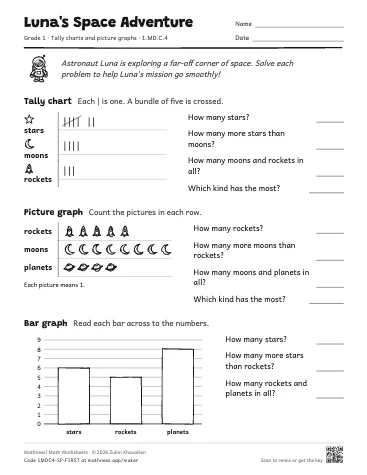
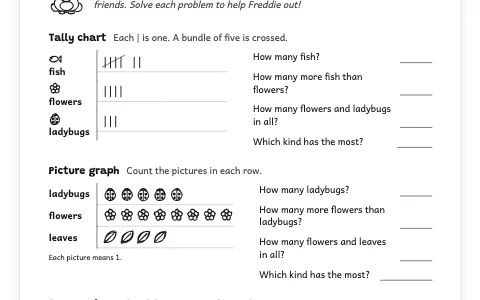
- 1.1.1.1Notice data patterns and pose statistical questions with teacher help.Tally charts and picture graphs · Picture and bar graphs (Grade 2)
- 1.1.1.2Collect data for a question and show it with drawings, tallies and simple bar graphs.Tally charts and picture graphs
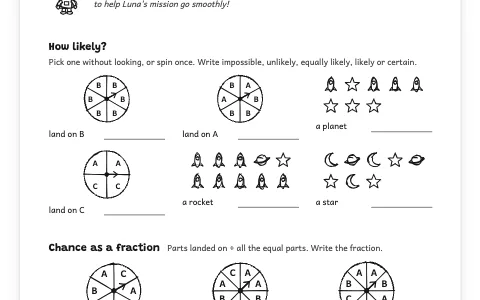
- 1.1.2.1Describe events as impossible, possible or certain.Chance and probability (Grade 4)
Spatial reasoning
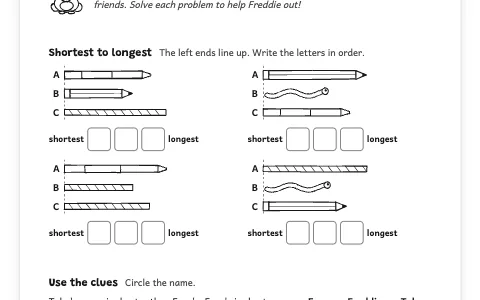
- 1.2.3.1Order three objects by length and compare two lengths using a third object.Ordering by length
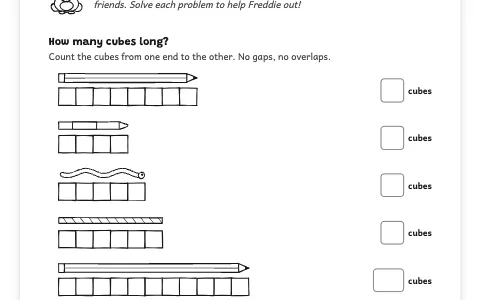
- 1.2.3.2Measure length using non-standard units.Measuring with units
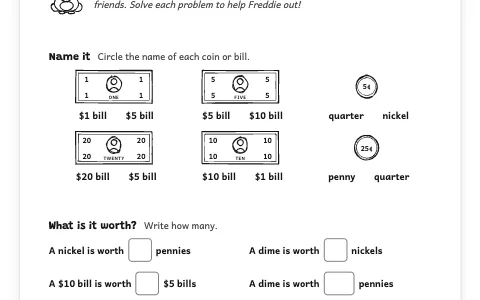
- 1.2.3.3Name pennies, nickels and dimes and total a group of them up to one dollar.Coins and bills
- 1.2.4.1Describe features of flat and solid shapes such as triangles, rectangles, cylinders and cones.Naming solid shapes · Shape attributes
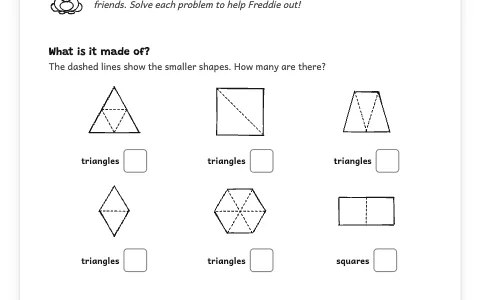
- 1.2.4.2Combine flat shapes into a composite shape and split composite shapes into parts.Putting shapes together
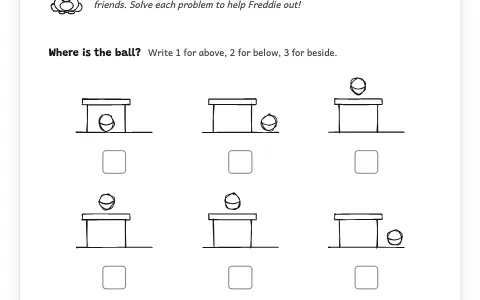
- 1.2.4.3Name shapes around them and describe positions using left and right.Above, below, beside (Kindergarten)
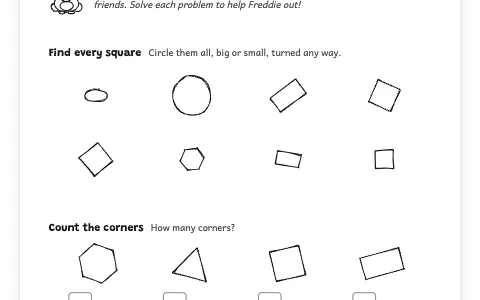
- 1.2.4.4Identify shapes no matter how they are turned.Naming shapes (Kindergarten)

Patterns & relationships
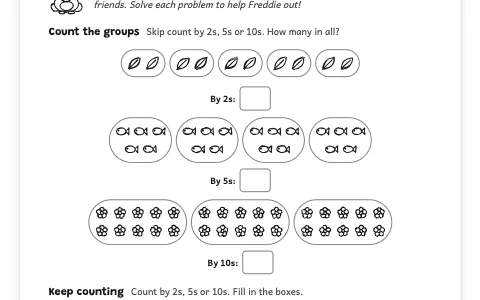
- 1.3.5.1Count collections up to 120 by grouping in fives or tens.Skip counting objects · Counting to 120
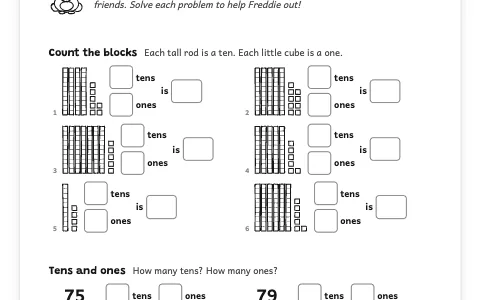
- 1.3.5.2Read, write, compare and order numbers to 120; see decade numbers as groups of ten.Counting to 120 · Tens and ones · Comparing two-digit numbers
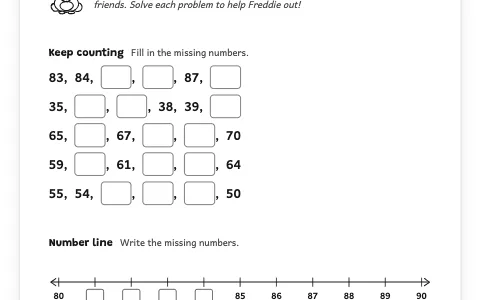
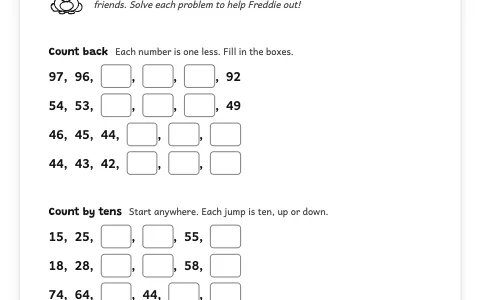
- 1.3.5.3Count forward and backward from any number up to 120.Counting back and by tens · Counting to 120
- 1.3.5.4Describe numbers 10 to 120 as some tens plus ones.Tens and ones
- 1.3.5.5Estimate amounts up to 120 using benchmarks of fives and tens.Counting to 120
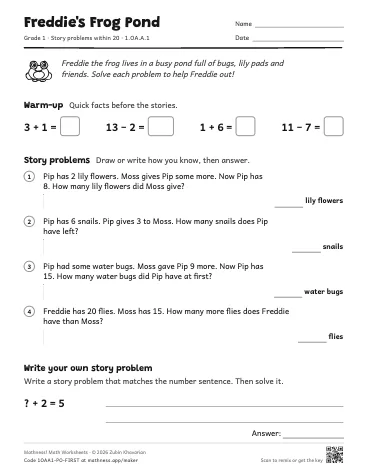
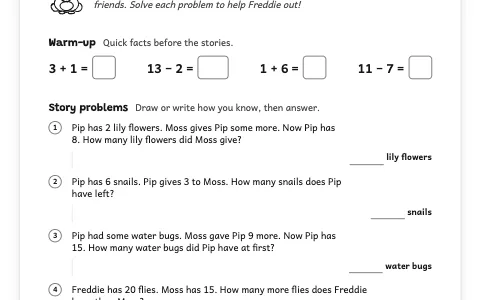
- 1.3.5.6Solve addition and subtraction stories within 20 with unknowns in any position.Story problems within 20
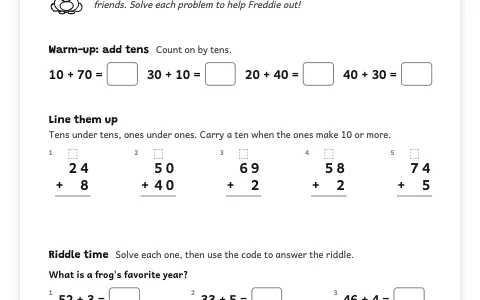
- 1.3.5.7Add within 100, two-digit plus one-digit or a multiple of ten, sometimes making a new ten.Adding within 100
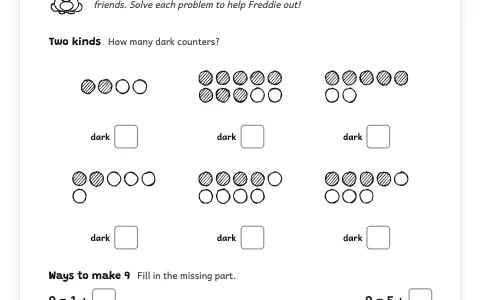
- 1.3.5.8Split numbers up to 10 into pairs in more than one way and record them.Breaking apart numbers (Kindergarten)
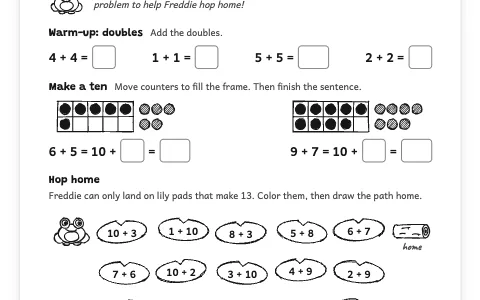
- 1.3.5.9Add and subtract within 20 using strategies like making ten; fluent within 10.Adding within 20 · Subtracting within 20
- 1.3.5.10Use pairs that make ten to add up to the next decade, through 100.Adding within 100
- 1.3.5.11Find the double of any one-digit number.Adding within 20 · Subtracting within 20
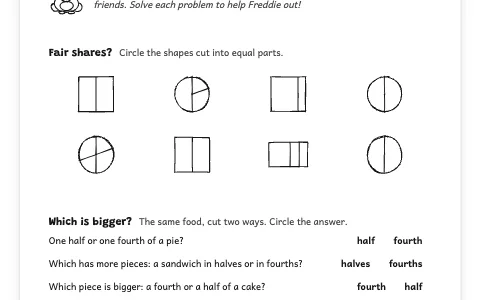
- 1.3.5.12Share a set of items equally between two groups and call each share a half.Halves and fourths
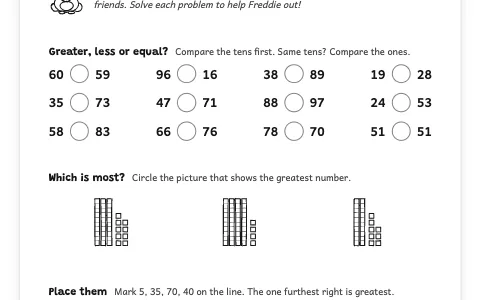
- 1.3.6.1Compare two two-digit numbers using tens and ones.Comparing two-digit numbers
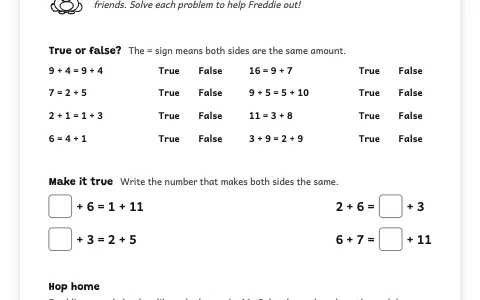
- 1.3.6.2Decide if addition and subtraction equations are true or false, even with operations on both sides.True or false equations
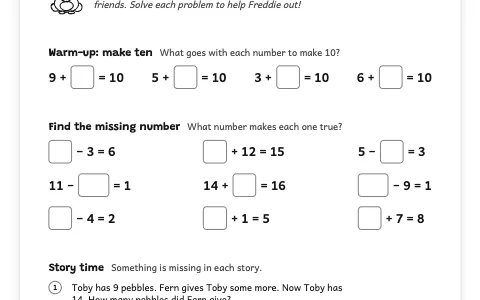
- 1.3.6.3Find the unknown number in an addition or subtraction equation with three numbers.Missing numbers
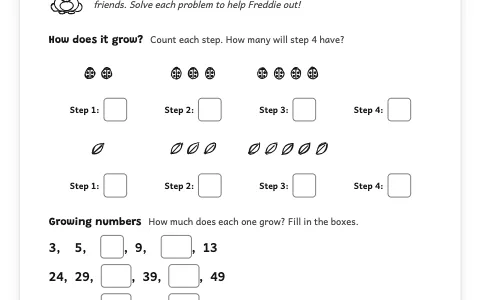
- 1.3.7.1Make simple patterns and find rules to continue them; calculators may help explore.Growing patterns
- 1.3.7.2Skip count by 2s and 5s from zero to 120 and by 10s from any number.Skip counting by 2s and 25s (Grade 2) · Skip counting (Grade 2)
- 1.3.7.3Describe what changes and what stays the same in a growing picture pattern.Growing patterns

Summaries are ours, in plain words. The same sheets by Common Core: Grade 1.