Minnesota (2027–28) grade 3 math worksheets
Every Minnesota 2027–28 grade 3 math standard by its own code, with the printable sheets that practise it: 29 of 29 have sheets. New problems every time, answer keys and a one-page guide for grown-ups. Free, no sign-up.
Data & probability
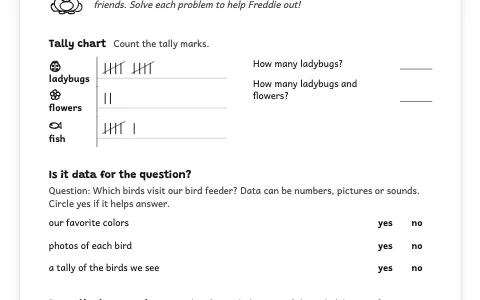
- 3.1.1.1Notice data patterns and ask statistical questions that data can answer.Picture and bar graphs (Grade 2) · Scaled graphs
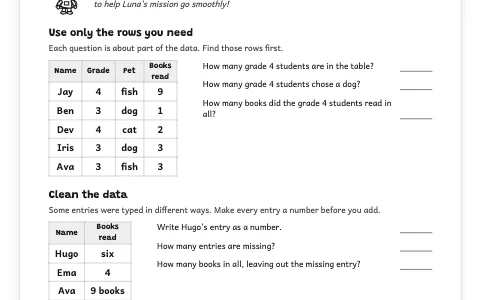
- 3.1.1.2Explain ways to collect data such as surveys, grouping and measuring.Choosing and cleaning data (Grade 4) · Scaled graphs
- 3.1.1.3Collect and organize data, handle missing values, and display it, including with technology.Scaled graphs
- 3.1.1.4Make predictions and see that the amount and source of data affect accuracy.Scaled graphs
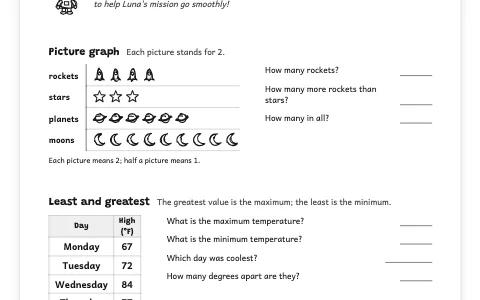
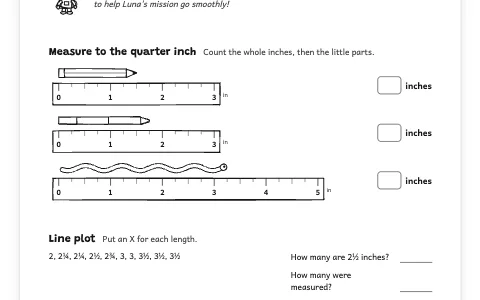
- 3.1.1.5Analyze tables, bar graphs, picture graphs and line plots with scales to support claims.Scaled graphs · Measuring to ¼ inch
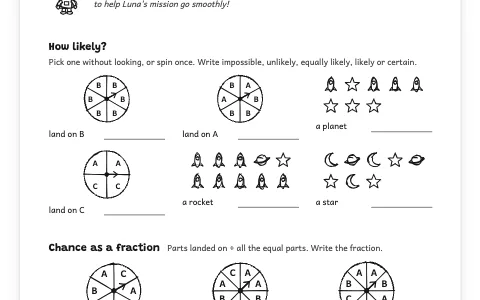
- 3.1.2.1Describe events as impossible, unlikely, equally likely, likely or certain.Chance and probability (Grade 4) · Scaled graphs
Spatial reasoning
- 3.2.3.1Measure lengths to the nearest quarter unit.Measuring to ¼ inch
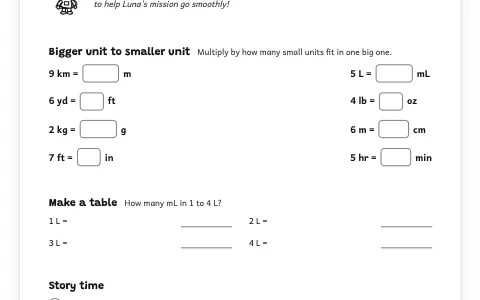
- 3.2.3.2Compare the sizes of units within one measurement system, like inches, feet and yards.Converting units (Grade 4)
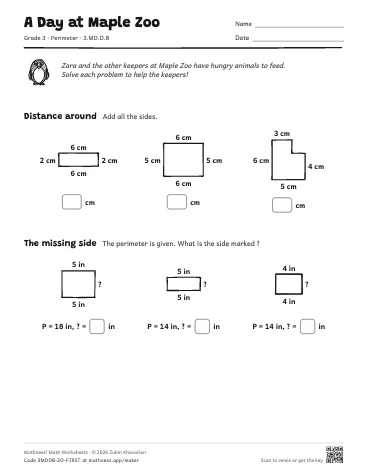
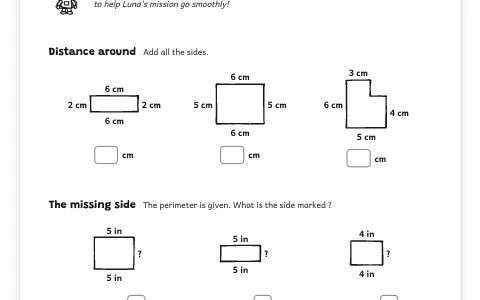
- 3.2.3.3Find the perimeter of a polygon with whole-number sides.Perimeter
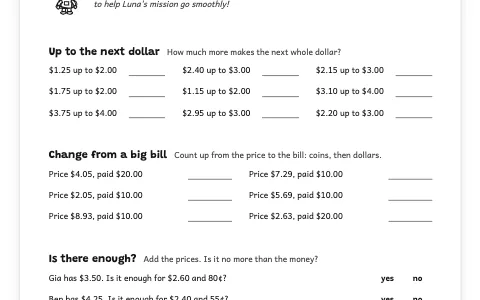
- 3.2.3.4Add and subtract to make change up to one dollar in different ways.Making change to $5 · Counting money (Grade 2)
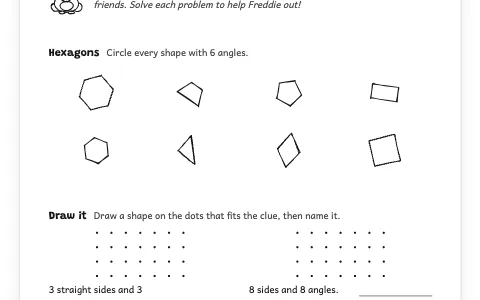
- 3.2.4.1Draw regular and irregular polygons with a given number of sides.Angles and faces (Grade 2)
Patterns & relationships
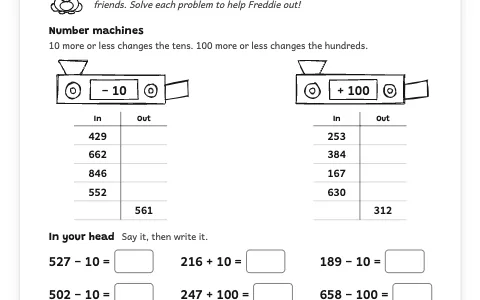
- 3.3.5.1Mentally find 100, 1000 or 10,000 more or less than a number and explain.Adding and subtracting 10 or 100 (Grade 2) · Multiplying with properties
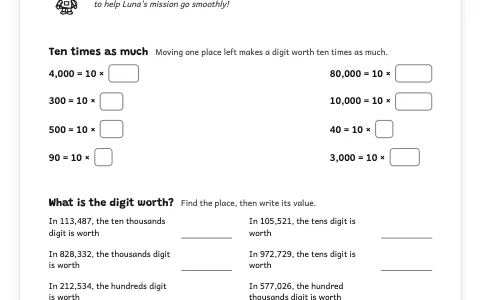
- 3.3.5.2Describe numbers up to 100,000 by place value.Ten times the place (Grade 4) · Reading big numbers (Grade 4)
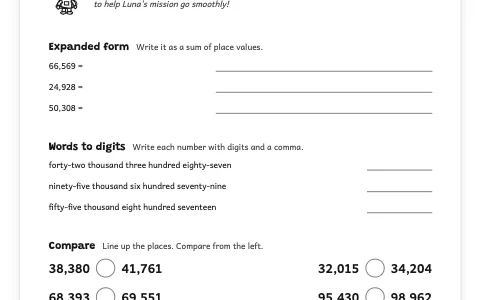
- 3.3.5.3Compare and order whole numbers up to 100,000 using <, = and >.Numbers to 100,000 · Reading big numbers (Grade 4)
- 3.3.5.4Estimate sums and differences up to 1000 using benchmarks and place value.Estimating sums and differences · Two-step story problems · Rounding to 10 and 100
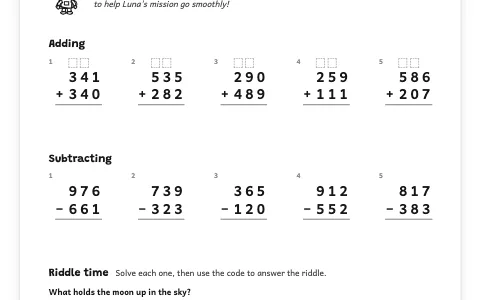
- 3.3.5.5Add and subtract within 1000 with flexible place-value strategies and explain them.Adding and subtracting within 1000
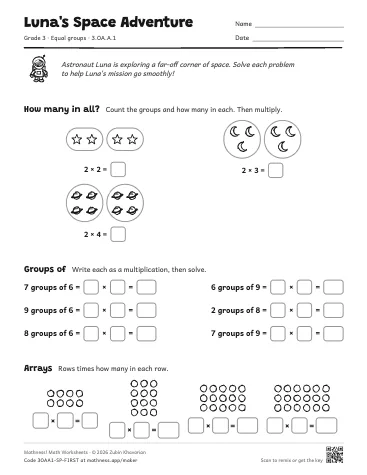
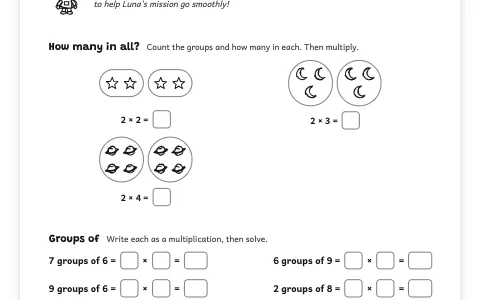
- 3.3.5.6Model and solve multiplication and division stories with one-digit factors using pictures.Equal groups · Sharing equally · Multiplication and division stories
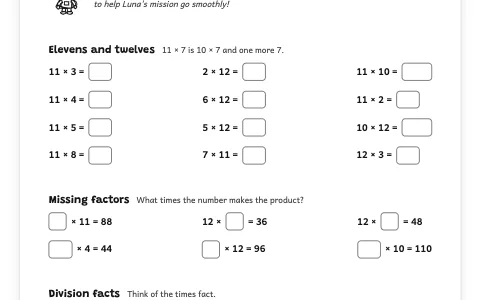
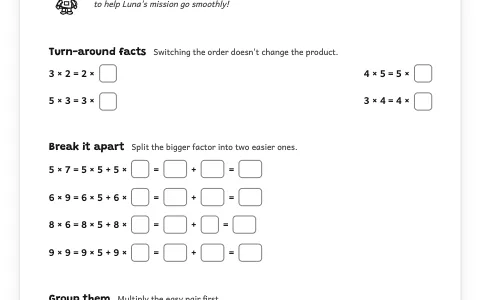
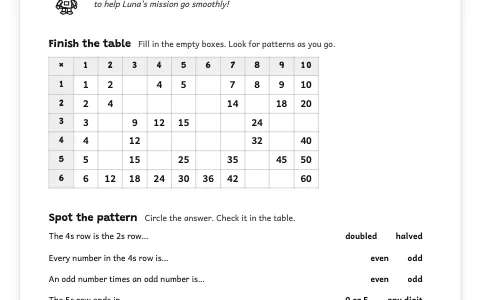
- 3.3.5.7Multiply and divide within 144 with strategies; fluent with 2s, 5s, 10s and squares.Times tables to 12 · Multiplying with properties · Division as a missing factor · Times tables
- 3.3.5.8Multiply one-digit numbers by multiples of 10 and 100.Multiplying by tens and hundreds (Grade 4) · Multiplying by tens
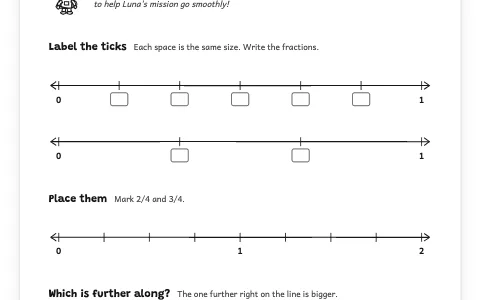
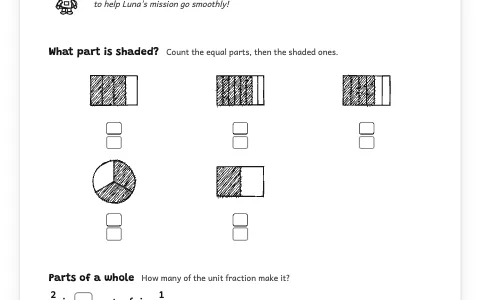
- 3.3.5.9Split circles, rectangles and the 0-to-1 number line into halves, thirds, fourths and eighths.Fractions on a number line · Equal parts as fractions
- 3.3.5.10Write fractions up to 2 as sums of unit fractions with pictures and symbols.Fractions of a whole · Adding fractions (Grade 4)
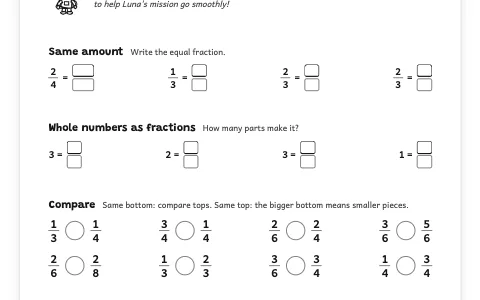
- 3.3.5.11Make equivalent forms of one half and one using halves, fourths and eighths, with models.Equivalent and comparing fractions
- 3.3.5.12Compare and order unit fractions and explain how size changes with the denominator.Equivalent and comparing fractions
- 3.3.5.13Use estimated sums and differences to set short- and long-term spending and saving goals.Spend, save, give (Grade 1) · Spending, credit and saving
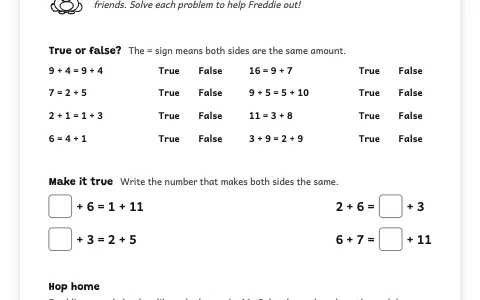
- 3.3.6.1Use relational thinking to find missing values in addition and subtraction sentences up to three digits.True or false equations (Grade 1) · Missing numbers (Grade 1)
- 3.3.6.2Make and justify claims about multiplying and dividing with 0 and 1.Multiplying with properties
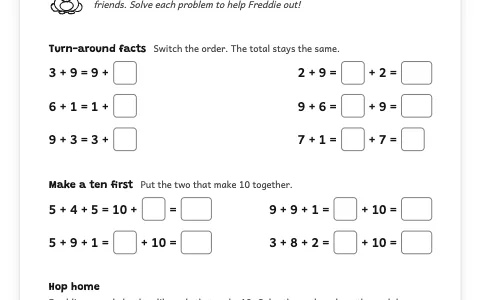
- 3.3.6.3Make and justify claims using commutative and associative properties of addition and multiplication.Turn-around and grouping facts (Grade 1) · Multiplying with properties
- 3.3.7.1Make and use one-step input-output rules with addition, subtraction or multiplication.Input-output tables (Grade 4) · Patterns in tables
- 3.3.7.2Extend a growing or shrinking picture pattern forward and back and justify.Patterns in tables · Number patterns (Grade 4)




Summaries are ours, in plain words. The same sheets by Common Core: Grade 3.