Nebraska grade 1 math worksheets
Every Nebraska grade 1 math standard by its own code, with the printable sheets that practise it: 32 of 32 have sheets. New problems every time, answer keys and a one-page guide for grown-ups. Free, no sign-up.
Numbers & operations
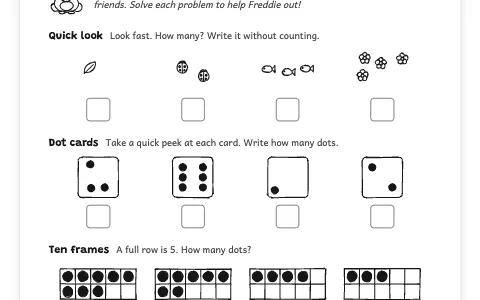
- 1.N.1.aSay how many are in a briefly shown group of up to 20 without counting.How many at a glance (Kindergarten)
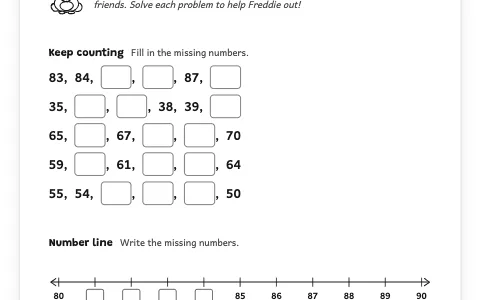
- 1.N.2.aCount aloud by ones and tens within 120, starting from any number.Counting to 120
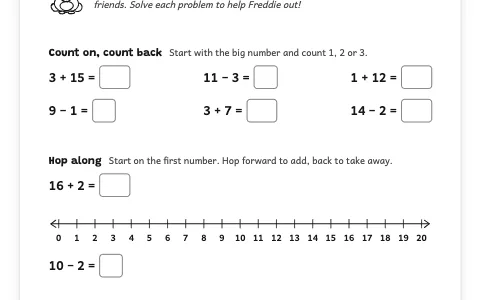
- 1.N.2.bCount on and back within 120, linking each step to adding or removing one object.Counting on and back · Counting to 120
- 1.N.2.cWrite the numeral for a set of up to 120 objects.Counting to 120
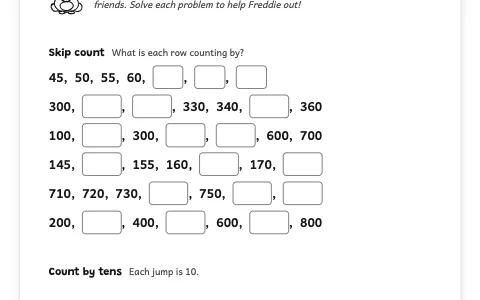
- 1.N.2.dUnderstand skip-counting patterns by 2s, 5s and 10s.Skip counting (Grade 2)
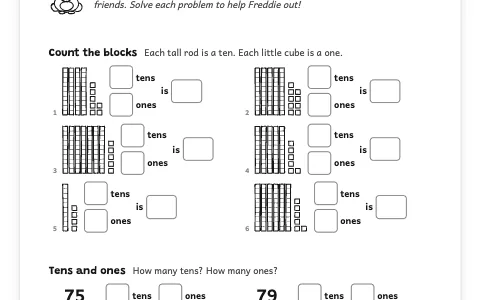
- 1.N.3.aUnderstand 10 as a bundle of ten ones and two-digit numbers as tens and ones.Tens and ones
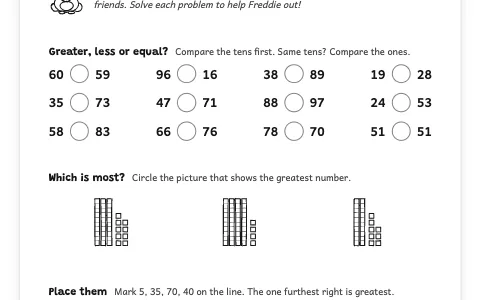
- 1.N.3.bCompare two-digit numbers with words and <, >, = and justify using tens and ones.Comparing two-digit numbers
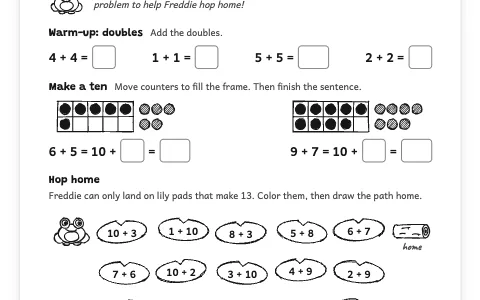
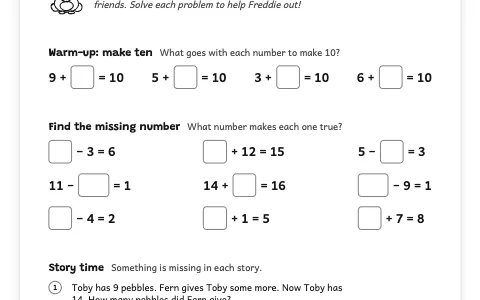
- 1.N.4.aAdd and subtract within 20 using strategies like counting on, making ten and doubles.Adding within 20 · Subtracting within 20 · Counting on and back
- 1.N.4.bAdd and subtract within 10 quickly, flexibly and accurately.Adding within 20 · Subtracting within 20
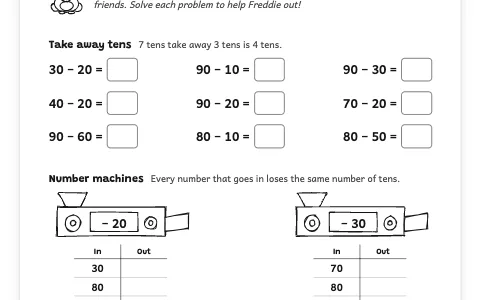
- 1.N.4.cFind the difference between two multiples of 10 (10 to 90) and write the equation.Subtracting tens
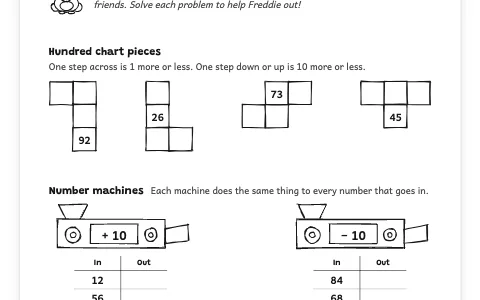
- 1.N.4.dFind 10 more or 10 less than a two-digit number mentally and explain.10 more and 10 less
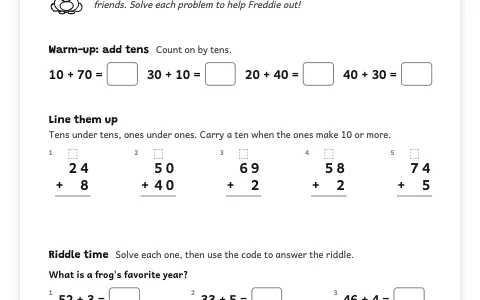
- 1.N.4.eAdd within 100 (two-digit plus one-digit or a multiple of ten) using place value; explain.Adding within 100
- 1.N.4.fWhen adding two-digit numbers, add tens to tens and ones to ones, sometimes making a ten.Adding within 100
- 1.N.4.gSubtract multiples of ten from any two-digit number with models and explain (CCSS: multiples of ten only).Subtracting tens
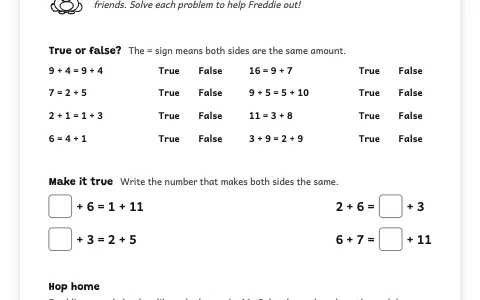
- 1.N.5.aUse the equal sign to decide if equations are true and give examples of true ones.True or false equations
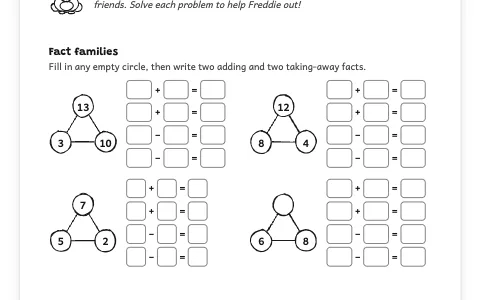
- 1.N.5.bSolve subtraction by thinking of a related addition fact.Fact families
- 1.N.5.cFind the missing whole number in an addition or subtraction equation.Missing numbers
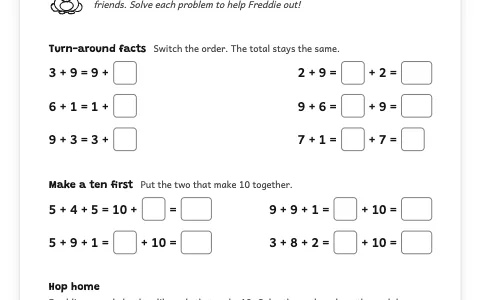
- 1.N.5.dUse the commutative property and composing or decomposing numbers as addition and subtraction strategies.Turn-around and grouping facts
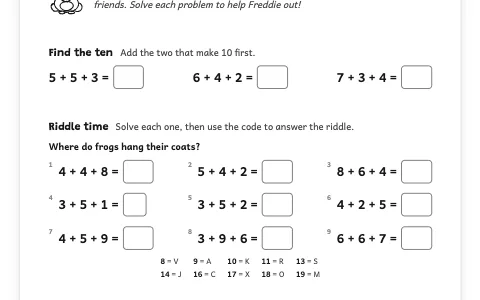
- 1.N.5.eSolve problems adding three whole numbers with a total of 20 or less.Adding three numbers
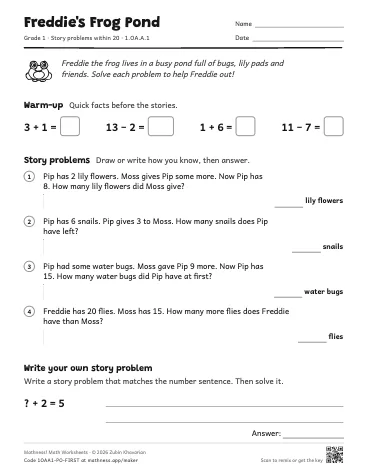
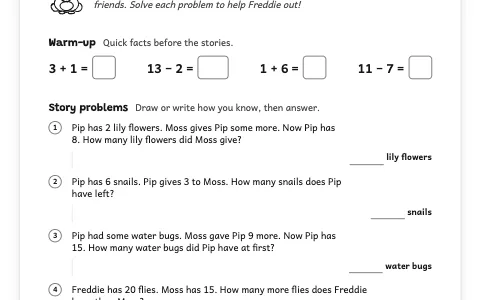
- 1.N.5.fSolve real add and subtract problems within 20 of all types, unknown in any position.Story problems within 20
- 1.N.5.gWrite a real-world story problem to match a given addition or subtraction equation within 20.Story problems within 20
Geometry
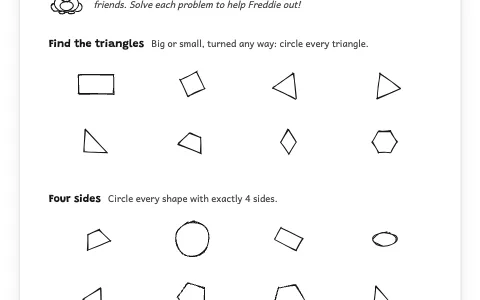
- 1.G.1.aFind geometric features of rhombi, trapezoids and hexagons in any position or size.Shape attributes
- 1.G.1.bFind geometric features of cones, cylinders, cubes and rectangular prisms in any position or size.Shape attributes
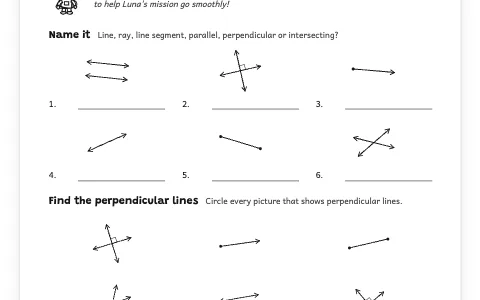
- 1.G.1.cDescribe lines and sides of shapes as parallel or not parallel.Lines, rays and segments (Grade 4)
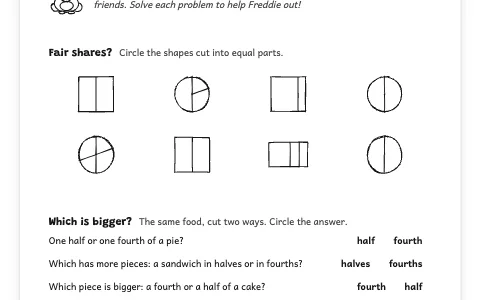
- 1.G.1.dSplit circles and rectangles into two or four equal parts named halves and fourths.Halves and fourths
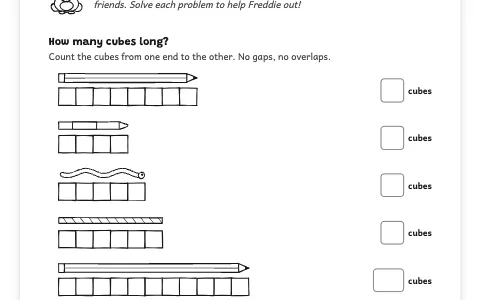
- 1.G.2.aMeasure length with copies of a non-standard unit laid end to end.Measuring with units
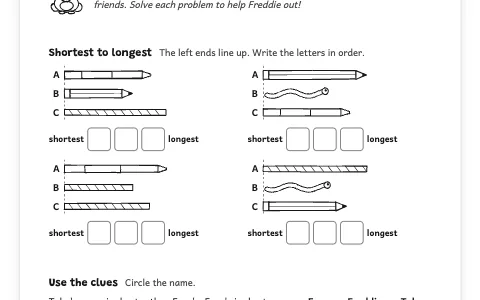
- 1.G.2.bOrder three objects by length, comparing directly or by using a third object.Ordering by length
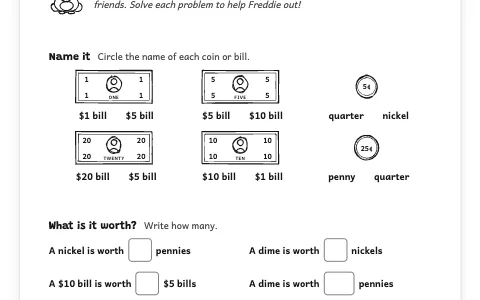
- 1.G.3.aKnow a dime equals ten pennies, link to tens and ones, and solve dime-penny problems with cents.Coins and bills
- 1.G.3.bCount sets of one coin type (pennies, nickels or dimes) by 1s, 5s or 10s.Coins and bills
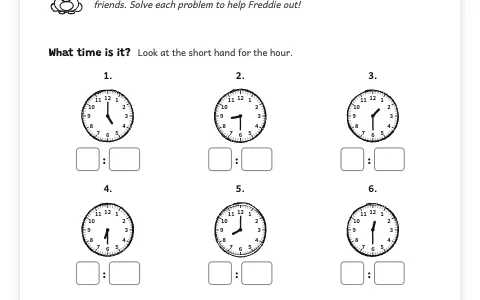
- 1.G.3.cTell and write time to the hour and half hour on analog and digital clocks.Time to the hour and half hour
Data & probability
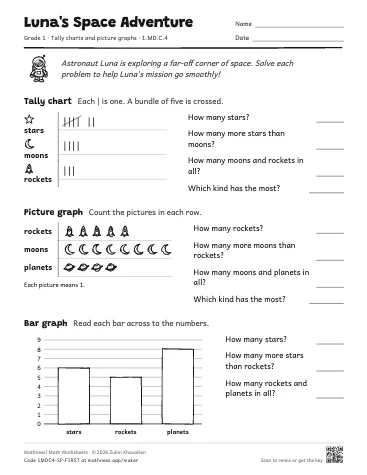
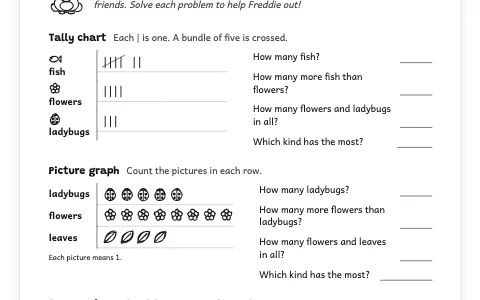
- 1.D.1.aCollect, organize and show data in up to three categories with a picture graph.Tally charts and picture graphs
- 1.D.2.aAnswer questions about a picture graph: total, each category, how many more or fewer.Tally charts and picture graphs
Summaries are ours, in plain words. The same sheets by Common Core: Grade 1.