
North Carolina (2028–29) grade 3 math worksheets
Every North Carolina 2028–29 grade 3 math standard by its own code, with the printable sheets that practise it: 58 of 58 have sheets. New problems every time, answer keys and a one-page guide for grown-ups. Free, no sign-up.
Algebraic & numerical reasoning
- 3.ANR.1.1
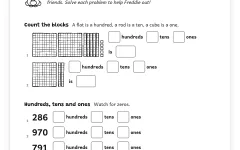
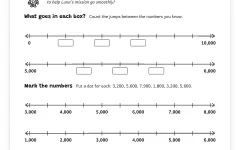
Read and write numbers to 10,000 and know each digit's value.
- 3.ANR.1.2
Write numbers to 10,000 in standard, expanded and word form.
- 3.ANR.1.3
Show numbers up to 1,000 in different ways by regrouping.
- 3.ANR.1.4
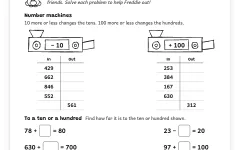
Add or subtract multiples of 10, 100 or 1,000 to numbers up to 10,000 in your head.
- 3.ANR.1.5
Compare and order numbers to 10,000 with >, <, = and ≠.
- 3.ANR.2.1
Solve one-step story problems adding and subtracting within 1,000.
- 3.ANR.2.2
Add and subtract within 1,000 using expanded form, properties, and how adding and subtracting undo each other.
- 3.ANR.2.3
Build fluency adding and subtracting within 1,000 by comparing strategies.
- 3.ANR.3.1
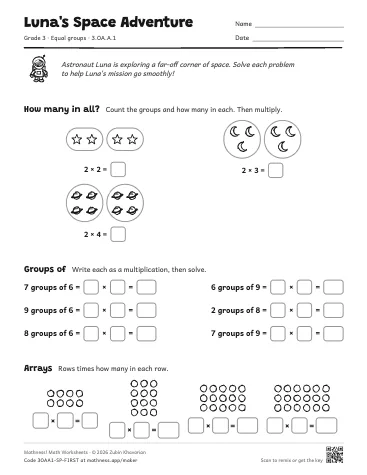
Understand factors up to 10 as the number of groups and the size of each group.
- 3.ANR.3.2
Multiply within 10 × 10 by repeated adding, skip counting, splitting a factor or switching the order.
- 3.ANR.3.3
Solve equal-groups and array multiplication story problems with factors to 10.
- 3.ANR.3.4
Write a multiplication equation with an unknown for a story problem.
- 3.ANR.3.5
Find patterns in multiplication on hundred charts, tables and number lines.
- 3.ANR.3.6
Multiply a one-digit number by a multiple of 10 up to 90.
- 3.ANR.4.1
Understand a division with divisor and answer up to 10 as the number of groups and the size of each group.
- 3.ANR.4.2
Divide within 10 × 10 by repeated adding or subtracting, skip counting, or splitting a factor.
- 3.ANR.4.3
Solve equal-groups and array division story problems within 10 × 10.
- 3.ANR.4.4
Write a division equation with an unknown for a story problem.
- 3.ANR.5.1
Explain how a story problem shows multiplying or dividing.
- 3.ANR.5.2
Use multiplication to divide, and division to multiply.
- 3.ANR.5.3
Decide and explain whether two multiplication or division expressions within 100 are equal.
- 3.ANR.5.4
Know multiplication and division facts to 10 × 10 using strategies.
- 3.ANR.5.5
Know the 0s, 1s, 2s, 5s and 10s facts by heart.
- 3.ANR.6.1
Solve two-step story problems with adding, subtracting and multiplying.
- 3.ANR.6.2
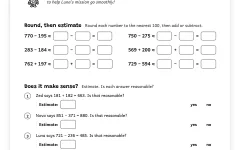
Estimate sums, differences, products and quotients in one- and two-step story problems.
- 3.ANR.7.1
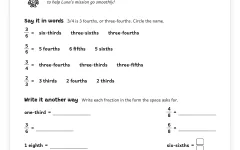
Know a unit fraction is one of the equal parts of a whole (halves, thirds, fourths, sixths, eighths).
- 3.ANR.7.2
Find unit fractions on area and length models (halves, thirds, fourths, sixths, eighths).
- 3.ANR.7.3
Explain with area models what a fraction's numerator counts (halves, thirds, fourths, sixths, eighths).
- 3.ANR.7.4
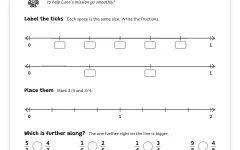
Explain with a number line what a fraction's numerator counts (halves, thirds, fourths, sixths, eighths).
- 3.ANR.7.5
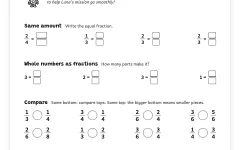
Find equivalent fractions with models: halves, fourths and eighths; thirds and sixths.
- 3.ANR.7.6
Know a fraction with the same top and bottom is one whole (halves, thirds, fourths, sixths, eighths).
- 3.ANR.7.7
Write whole numbers up to 4 as fractions (halves, thirds, fourths, sixths, eighths).
- 3.ANR.7.8
Know fractions can only be compared when they are of the same whole.
- 3.ANR.7.9
Compare and order fractions with the same numerator or denominator, using models and >, < or = (halves, thirds, fourths, sixths, eighths).
Spatial, geometric & measurement reasoning
- 3.SGMR.1.1
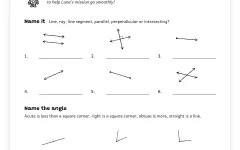
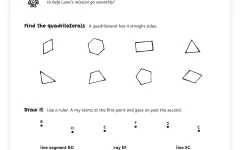
Draw points, lines, line segments, and parallel and perpendicular lines.
- 3.SGMR.1.2
Find points, lines, segments, and parallel and perpendicular lines in shapes.
- 3.SGMR.1.3
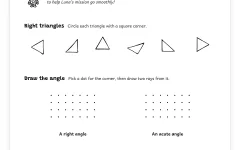
Know an angle is two rays with a shared endpoint.
- 3.SGMR.1.4
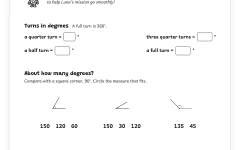
Name angles as acute, right, obtuse or straight by comparing them to a square corner or a straight line.
- 3.SGMR.1.5
Draw shapes that are and are not quadrilaterals.
- 3.SGMR.1.6
Name parallelograms, rhombuses, rectangles, squares and trapezoids by their features.
- 3.SGMR.2.1
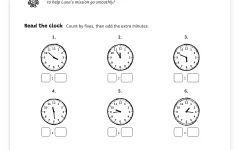
Solve problems about start times, end times and time passed within an hour.
- 3.SGMR.2.2
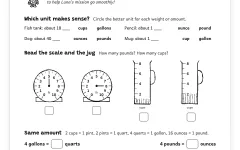
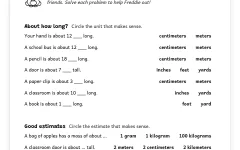
Estimate length, capacity and weight in customary units using known benchmarks.
- 3.SGMR.2.3
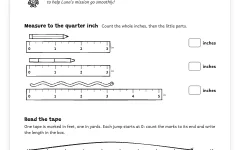
Measure length to the half and quarter inch, and in feet and yards.
- 3.SGMR.2.4
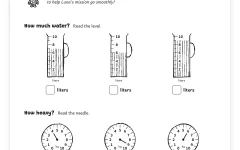
Measure capacity in cups, pints, quarts and gallons.
- 3.SGMR.2.5
Measure weight in ounces and pounds.
- 3.SGMR.2.6
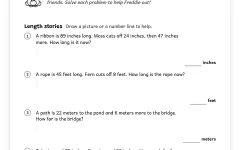
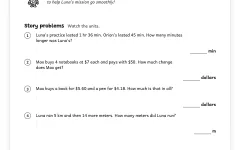
Solve one-step story problems with whole-number lengths, weights and capacities in the same customary unit, using +, −, × or ÷.
- 3.SGMR.3.1
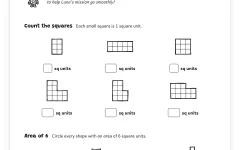
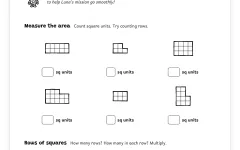
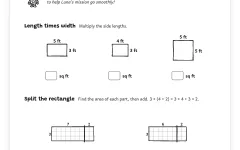
Find the area of a rectangle by covering it with unit squares.
- 3.SGMR.3.2
Find the area of rectangles with whole-number sides, including story problems.
- 3.SGMR.3.3
Find a rectangle's area by splitting it into two smaller rectangles.
- 3.SGMR.3.4
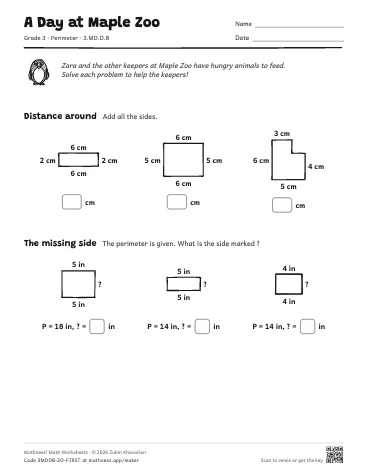
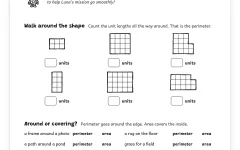
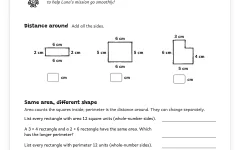
Find the perimeter of shapes with up to 8 sides, including story problems.
- 3.SGMR.3.5
Use what you know about quadrilaterals and regular shapes to find a missing side from the perimeter.
Reasoning with data
- 3.RD.1.1
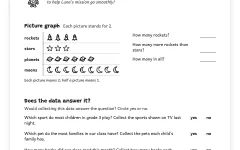
Ask questions that need data in groups to answer.
- 3.RD.1.2
Decide what data answers a question, with up to 5 groups.
- 3.RD.1.3
Plan how to collect data in groups to answer a question.
- 3.RD.1.4
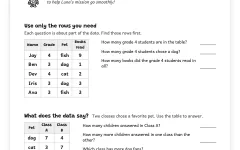
Collect data in groups to answer a question.
- 3.RD.1.5
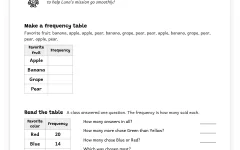
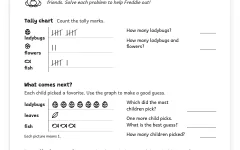
Show data on a frequency table, scaled bar graph or picture graph.
- 3.RD.1.6
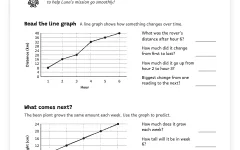
Describe and compare data, draw conclusions and back them up with the data.
- 3.RD.1.7
Spot patterns in data and use them to make predictions.
Summaries are ours, in plain words. The same sheets by Common Core: Grade 3. North Carolina's standards are published by the North Carolina Department of Public Instruction; Mathness! isn't affiliated with or endorsed by it.