
North Carolina (2028–29) grade 4 math worksheets
Every North Carolina 2028–29 grade 4 math standard by its own code, with the printable sheets that practise it: 64 of 64 have sheets. New problems every time, answer keys and a one-page guide for grown-ups. Free, no sign-up.
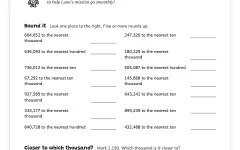
Algebraic & numerical reasoning
- 4.ANR.1.1
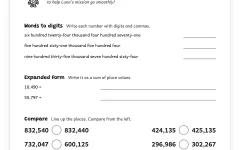
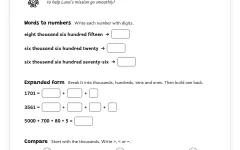
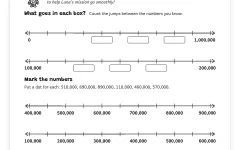
Read and write numbers to 100,000 and know each digit's value.
- 4.ANR.1.2
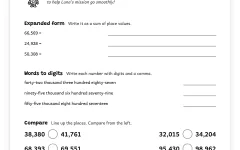
Match numbers to 100,000 in standard, expanded, word and regrouped forms (like 14 hundreds 3 tens).
- 4.ANR.1.3
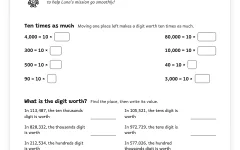
Know a digit is worth ten times as much as the same digit one place to its right, in numbers to 100,000.
- 4.ANR.1.4
Compare and order numbers to 100,000 with >, <, = and ≠.
- 4.ANR.2.1
Connect adding and subtracting strategies within 1,000 to the standard method.
- 4.ANR.2.2
Add and subtract numbers to 100,000 with the standard method.
- 4.ANR.3.1
Find the factor pairs of a number up to 50.
- 4.ANR.3.2
Tell whether a number up to 50 is prime, composite or neither.
- 4.ANR.3.3
Know a number is a multiple of each of its factors.
- 4.ANR.3.4
Tell whether a number is a multiple of a one-digit number.
- 4.ANR.3.5
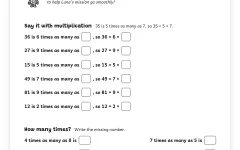
Know multiplication facts to 10 × 10 using strategies.
- 4.ANR.3.6
Know multiplication facts to 10 × 10 by heart.
- 4.ANR.3.7
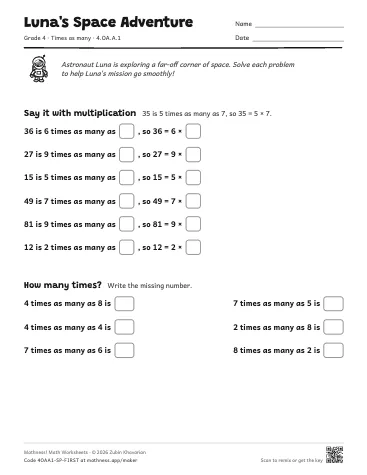
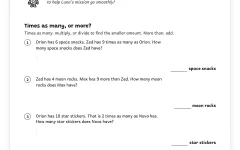
Tell 'times as many' comparisons apart from 'more than' comparisons.
- 4.ANR.3.8
Solve 'times as many' story problems with factors to 10.
- 4.ANR.3.9
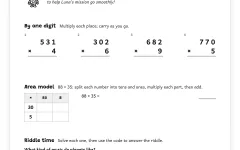
Multiply up to three digits by one digit, or two digits by two digits, using place value and area models.
- 4.ANR.3.10
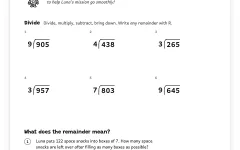
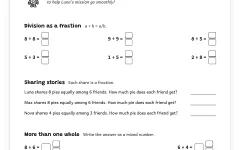
Divide up to three digits by one digit, with remainders.
- 4.ANR.3.11
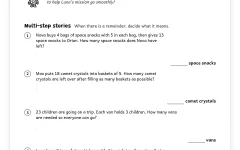
Decide what a remainder means in a division story problem.
- 4.ANR.4.1
Solve two-step story problems with all four operations, using a letter for the unknown.
- 4.ANR.4.2
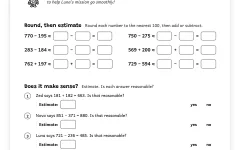
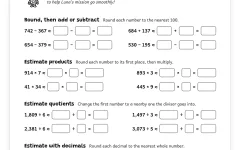
Check that an answer makes sense by estimating.
- 4.ANR.5.1
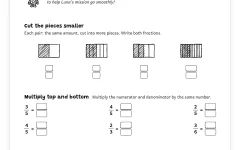
Explain with area and length models why two fractions are equivalent (denominators 2–6, 8, 10, 12, 100).
- 4.ANR.5.2
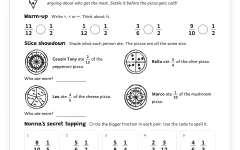
Compare and order fractions (denominators 2–6, 8, 10, 12, 100) with models and >, < and =.
- 4.ANR.5.3
Compare and order fractions (denominators 2–6, 8, 10, 12, 100) using 0, ½ and 1 as benchmarks.
- 4.ANR.5.4
Compare and order related fractions (halves, fourths, eighths; thirds, sixths, twelfths; fifths, tenths, hundredths) by finding equivalent ones.
- 4.ANR.5.5
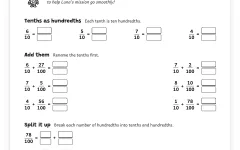
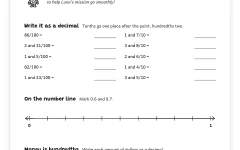
Write decimals under 2 in tenths and hundredths, and link them to fractions.
- 4.ANR.5.6
Know decimals can only be compared when they are of the same whole.
- 4.ANR.5.7
Compare and order decimals to hundredths with models and >, < and =.
- 4.ANR.6.1
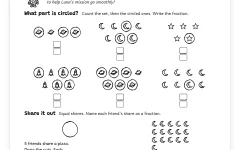
Add and subtract fractions with the same denominator (denominators 2–6, 8, 10, 12, 100) as joining and taking apart parts of one whole, with models and equations.
- 4.ANR.6.2
Break a fraction into a sum of unit fractions, and into other same-denominator sums, in more than one way (denominators 2–6, 8, 10, 12, 100).
- 4.ANR.6.3
Add and subtract fractions and mixed numbers with the same denominator (denominators 2–6, 8, 10, 12, 100).
- 4.ANR.6.4
Solve one- and two-step story problems adding and subtracting fractions and mixed numbers with the same denominator.
- 4.ANR.6.5
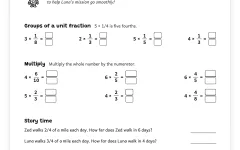
Use models to show a fraction as a whole number up to 12 times a unit fraction (denominators 2–6, 8, 10, 12).
- 4.ANR.6.6
Multiply a whole number by a fraction less than one (denominators 2–6, 8, 10, 12).
- 4.ANR.6.7
Find a fraction of a set (like ¾ of 12) by multiplying, using set models and arrays (denominators 2–6, 8, 10, 12).
- 4.ANR.6.8
Solve one-step story problems multiplying a fraction by a whole number up to 12 (denominators 2–6, 8, 10, 12).
- 4.ANR.7.1
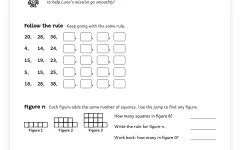
Make a shape or number pattern from a rule.
- 4.ANR.7.2
Find the rule of a shape or number pattern.
- 4.ANR.7.3
Tell growing patterns from repeating ones and continue them, including in story problems.
Spatial, geometric & measurement reasoning
- 4.SGMR.1.1
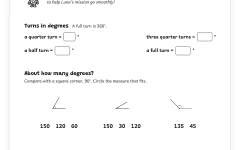
Know angles are measured in degrees, parts of a circle.
- 4.SGMR.1.2
Estimate angles using angle types (acute, right, obtuse, straight) and benchmark angles.
- 4.SGMR.1.3
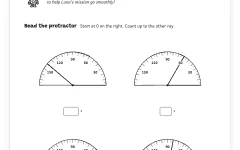
Measure angles in whole degrees with a protractor.
- 4.SGMR.1.4
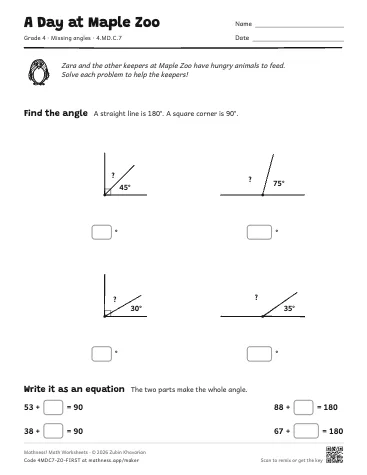
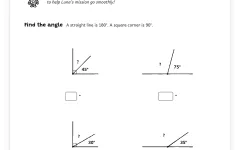
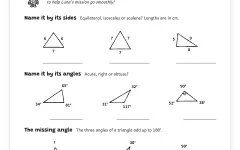
Find a missing angle by adding or subtracting, on a diagram or in one- or two-step story problems.
- 4.SGMR.2.1
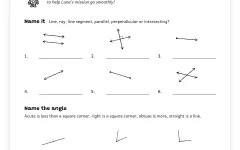
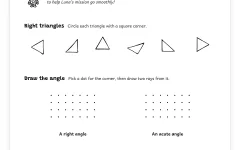
Draw and name points, lines, rays, angles, and parallel and perpendicular lines.
- 4.SGMR.2.2
Draw triangles of each angle type and side type, including both at once (like a right isosceles triangle).
- 4.SGMR.2.3
Name triangles by their angles and by their sides, including both at once.
- 4.SGMR.2.4
Sort triangles and quadrilaterals by angles, sides and parallel or perpendicular lines.
- 4.SGMR.3.1
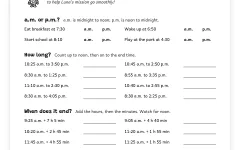
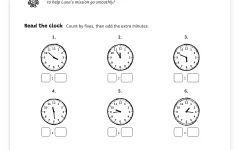
Solve problems about start times, end times and time passed across the hour.
- 4.SGMR.3.2
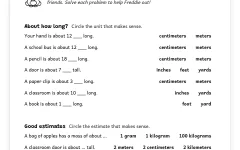
Estimate metric length, capacity and weight using benchmarks (like a liter bottle or a 1 kg bag).
- 4.SGMR.3.3
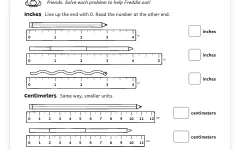
Measure length in centimeters and meters.
- 4.SGMR.3.4
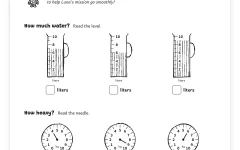
Measure capacity in liters and milliliters.
- 4.SGMR.3.5
Measure weight in grams and kilograms.
- 4.SGMR.3.6
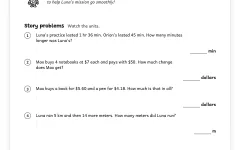
Solve one-step story problems with whole-number metric lengths, weights and capacities, all in the same unit, using +, −, × or ÷.
- 4.SGMR.3.7
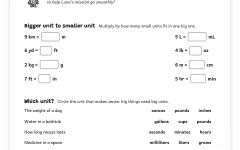
Convert metric measures from a larger unit to a smaller one using a table.
- 4.SGMR.4.1
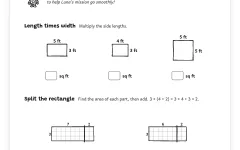
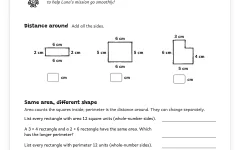
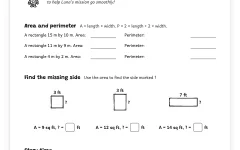
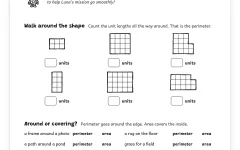
Use area and perimeter formulas for rectangles in story problems.
- 4.SGMR.4.2
Find the area of shapes made of two or three rectangles.
- 4.SGMR.4.3
Solve problems where rectangles share an area but not a perimeter, or the reverse.
Reasoning with data
- 4.RD.1.1
Ask questions that need data in groups or numbers to answer.
- 4.RD.1.2
Tell whether a question will give data in groups or numbers.
- 4.RD.1.3
Plan how to collect data to answer a question.
- 4.RD.1.4
Collect data to answer a question.
 Frequency tablesGrade 3 sheet
 Mode, median and rangeSheet, answer key and guide
 Line graphsSheet, answer key and guide
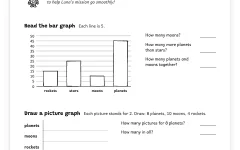 Bar graphs and scalesSheet, answer key and guide
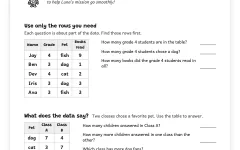 Choosing and cleaning dataSheet, answer key and guide
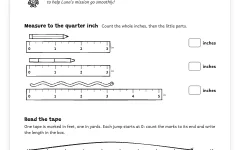 Measuring to ¼ inchGrade 3 sheet
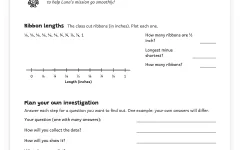 Line plots with fractionsSheet, answer key and guide
 - 4.RD.1.5
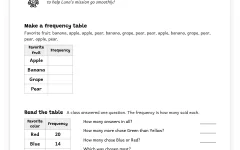
Show data on a frequency table, line plot, or single or double bar graph.
- 4.RD.1.6
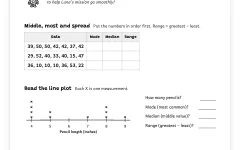
Find the range (how spread out data is) and the mode (most common value) of a data set.
- 4.RD.1.7
Find the median of a data set.
- 4.RD.1.8
Describe and compare data, draw conclusions and back them up with the data.
- 4.RD.1.9
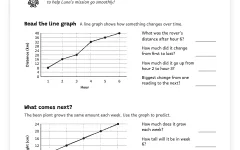
Spot patterns in data and use them to make predictions.
Summaries are ours, in plain words. The same sheets by Common Core: Grade 4. North Carolina's standards are published by the North Carolina Department of Public Instruction; Mathness! isn't affiliated with or endorsed by it.